Wall to Glass Hinge vs Glass to Glass Hinge: Which Is Better?
In modern architectural design, frameless glass doors have become a symbol of simplicity, elegance, and transparency. Whether in residential bathrooms, office partitions, or commercial spaces, the choice of hinges plays a crucial role in the door’s performance and appearance. The most common hinge types include wall-to-glass hinges and glass-to-glass hinges.
While both share the same basic function—supporting the glass door and ensuring its smooth opening—their structural designs, installation requirements, and visual effects differ significantly. Today, Sateer will provide a detailed analysis.

Wall to Glass Hinges
A wall to glass hinge connects a glass door panel directly to a solid wall. One side of the hinge is securely mounted to a structural wall (such as concrete or reinforced tile), while the other side clamps or bolts onto the glass panel.
This is one of the most widely used hinge types in frameless shower doors and standard glass enclosures.
Key Characteristics:Anchored directly to a structural wall;Suitable for 8mm–12mm tempered glass;Requires precise wall reinforcement;Common in single-door shower installations.
Advantages
The biggest strength of wall to glass hinges lies in structural stability. Because one side of the hinge is attached to a solid wall, it provides strong load-bearing support. The wall absorbs much of the door’s weight and operational stress, reducing strain on the glass itself.
Installation is also relatively straightforward. Since the hinge connects to a fixed surface, alignment is generally easier compared to glass-to-glass systems. For residential renovations or projects with an existing side wall, this makes wall to glass hinges a practical and efficient solution.
From a cost perspective, this system can also be more economical. It often requires fewer glass panels, which helps reduce material and labor expenses.
Limitations
However, wall to glass hinges require a suitable structural wall. If the space design does not include a proper mounting surface, additional reinforcement may be necessary. In fully frameless layouts where transparency is a priority, the visible wall connection may slightly reduce the seamless aesthetic effect.
Glass to Glass Hinges
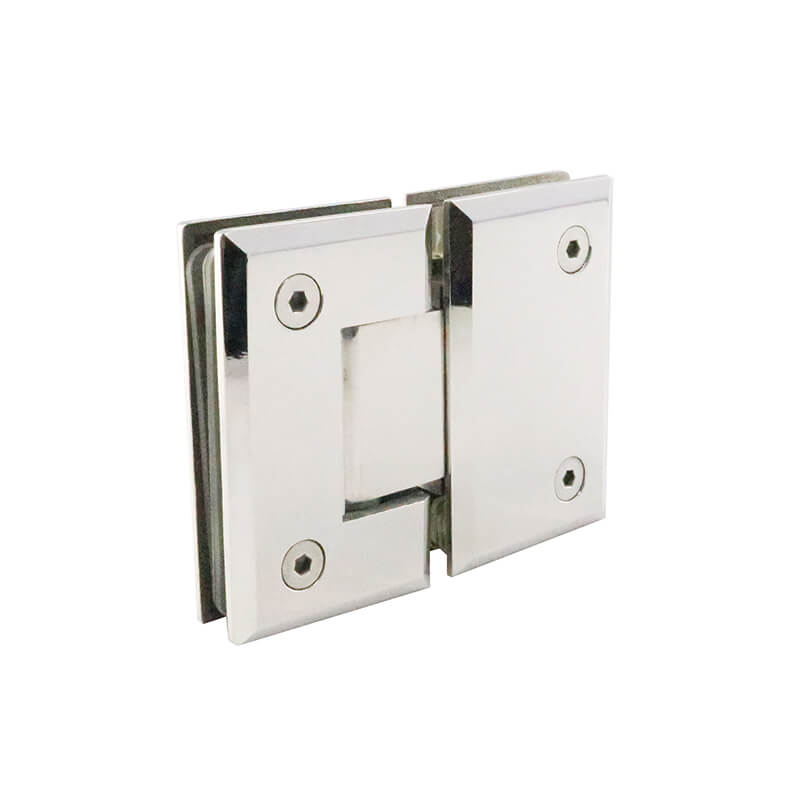
A glass to glass hinge connects one glass panel directly to another. Instead of relying on a wall for support, both sides of the hinge are mounted onto glass panels. These hinges are commonly used in 90°, 135°, or 180° configurations to create corner enclosures or custom layouts.
They are frequently found in high-end shower rooms and contemporary architectural glass systems.
Key Characteristics:Connects two glass panels;Designed for frameless enclosures;Requires precise glass fabrication;Supports flexible layout designs.
Advantages
The primary advantage of glass to glass hinges is aesthetics. Without a wall connection, the enclosure appears more open and visually seamless. This enhances light flow and creates a clean, modern look that is highly desirable in luxury spaces.
Glass to glass hinges also provide greater design flexibility. They allow for corner installations, walk-in enclosures, and creative architectural configurations where walls are not ideally positioned for door mounting.
For projects focused on maximizing transparency and achieving a premium visual effect, glass to glass hinges offer a clear advantage.
Limitations
Because both sides are attached to glass, the structural load is distributed across the panels. This requires thicker tempered glass and highly accurate fabrication. Any measurement errors can affect alignment and performance.
Installation is more complex and typically requires professional expertise. As a result, both material and labor costs may be higher compared to wall to glass systems.
Comparing Performance and Practicality
When evaluating which hinge type is better, it helps to consider three main factors: structure, installation, and design.
Structural Stability
Wall to glass hinges generally offer stronger direct support due to their wall anchoring. For heavy doors or high-frequency use, this added stability can be beneficial.
Glass to glass hinges are also durable when properly installed, but they rely entirely on the integrity of the glass panels and precise engineering.
Installation Complexity
Wall to glass hinges are usually easier to install, especially in standard residential projects. The presence of a fixed wall simplifies alignment.
Glass to glass hinges demand higher precision in glass cutting, drilling, and positioning. This increases the importance of experienced installers.
Design Impact
If your goal is a minimalist and fully frameless appearance, glass to glass hinges create a more seamless effect. They reduce visual interruption and enhance openness.
If practicality, budget, and ease of installation are your priorities, wall to glass hinges are often the more efficient choice.
Cost Considerations
Budget is often a deciding factor. Wall to glass systems tend to be more cost-effective because:
They require fewer glass panels;Installation is generally simpler;Alignment is less demanding.
Glass to glass systems may involve additional fixed panels and more complex labor, increasing overall project costs.
However, in luxury or commercial environments where visual presentation is critical, the additional investment in glass to glass hinges may be justified.
Which Is Better?
There is no universal answer. The better choice depends entirely on your project requirements.
Choose wall to glass hinges if:
You have a strong side wall available;You want a stable and cost-efficient solution;The installation is residential and straightforward.
Choose glass to glass hinges if:
You prioritize aesthetics and seamless design;You need flexible layout options;The project aims for a high-end, frameless look.
Both hinge types can deliver excellent performance when manufactured with high-quality materials and installed correctly.
Final Thoughts
Ultimately, selecting the right hinge is about balancing structural needs, design goals, and budget. Whether you opt for wall to glass or glass to glass hinges, quality hardware is essential to ensure safety, durability, and smooth operation.
For projects that demand precision engineering and refined finishes, Sateer provides reliable glass hinge solutions designed to meet both functional and aesthetic standards. With strong material quality and careful craftsmanship, Sateer helps bring modern glass designs to life with confidence and lasting performance.
-

How to Find Reliable Frameless Shower Door Pivot Hinge Suppliers?
16-03-2026 -

Glass Panel Hinge Maintenance: What Should You Do to Make It Last Longer?
06-03-2026 -
What Are the Different Types of Frameless Glass Hinges and Their Uses?
04-03-2026 -
Why Do Bathroom Glass Door Hinges Keep Rusting, and How Can You Prevent It?
28-02-2026 -
What to Look for When Buying Shower Screen Door Pivot Hinges?
27-02-2026


-
Why Do Shower Glass Door Hinges Fail and How to Prevent It?
18-03-2026 -
Do Framed Shower Door Hinges Rust Over Time and How Can You Prevent It?
17-03-2026 -
What Are the Best Shower Door Hinges for Glass-to-Glass Installations?
14-03-2026 -
Why Do Some Frameless Glass Shower Door Hinges Fail and How to Prevent It?
13-03-2026 -
How Do Frameless Shower Screen Hinges Affect Durability and Safety?
12-03-2026