SS Handle for Glass Door: Engineering Precision Behind a Simple Pull
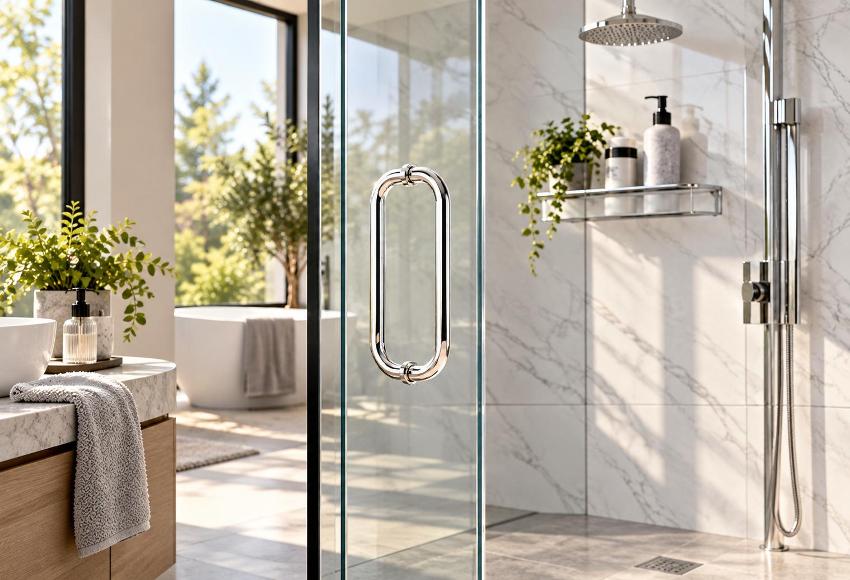
Glass doors occupy a strange position in architecture. They promise transparency and openness, yet they demand hardware that somehow remains visible while disappearing into the design. The ss handle for glass door addresses this paradox not through ornament, but through precision in material choice, mounting mechanics, and the invisible engineering that prevents the two most common failures: noise and cracking.
When specifying hardware for glass installations, the handle becomes more than an access point. It acts as a stress concentrator, a thermal bridge, and a wear surface that endures thousands of cycles. Stainless steel emerged as the dominant material not because of fashion, but because it solves problems that aluminum and brass cannot: resistance to chloride corrosion in coastal environments, dimensional stability across temperature swings, and a surface hardness that resists the micro-abrasions from fingers, rings, and cleaning chemicals.
Why Stainless Steel Became the Default for Glass Door Hardware
The shift toward stainless steel in glass door applications traces back to material science rather than aesthetics. Glass, being an amorphous solid, exhibits brittle fracture behavior. Any metal in direct contact must distribute load evenly and avoid introducing point stresses that propagate cracks. Stainless steel, particularly austenitic grades like 304 and 316, provides a combination of yield strength and ductility that aluminum cannot match.
Three material properties drive this choice:
- Elastic modulus compatibility: Stainless steel’s modulus sits around 200 GPa, which helps distribute stress at the interface with glass.
- Passivation behavior: Chromium oxide forms a self-healing surface layer that resists corrosion without flaking, unlike painted or anodized finishes that degrade and introduce contaminants.
- Thermal expansion coefficient: Austenitic stainless expands at roughly 17 × 10⁻⁶ per °C, close enough to glass (9 × 10⁻⁶ per °C) to avoid differential movement that loosens fasteners or cracks tempered panels.
For commercial installations, 316 stainless becomes necessary in marine or industrial settings where chloride exposure would pit 304 within months. The molybdenum addition in 316 forms a more resilient passive layer, extending service life from years to decades without visible degradation.
Mounting Mechanics: Preventing the Three Common Failure Modes
Most ss handle for glass door failures originate not from the handle itself, but from how it transfers load to the glass. Tempered glass can withstand over 10,000 psi in compression but fails catastrophically under tensile stress or point loading. The mounting system must distribute force across a wide area while accommodating thermal expansion and operational vibration.
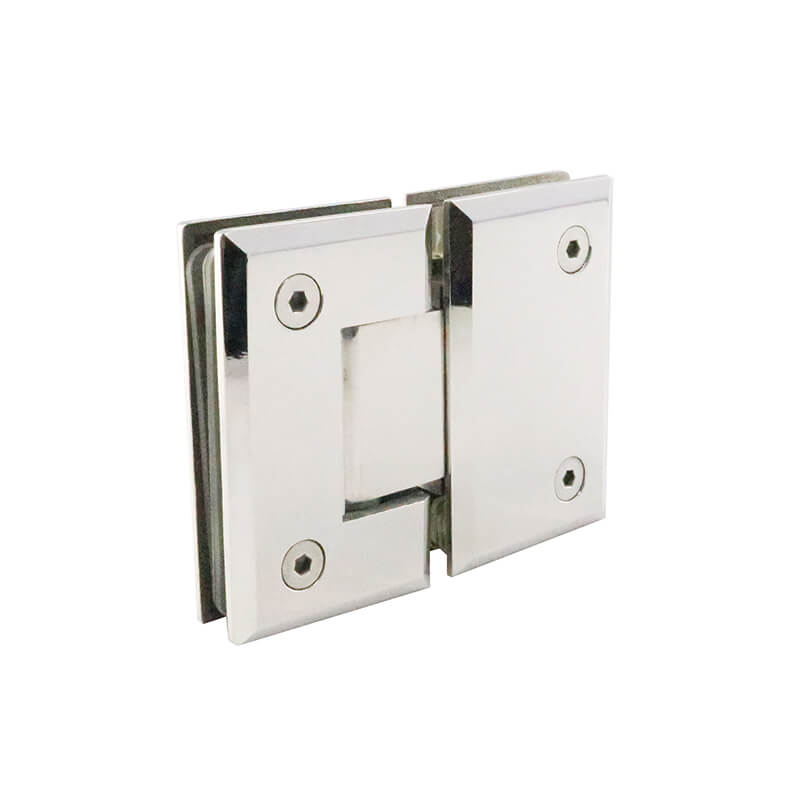
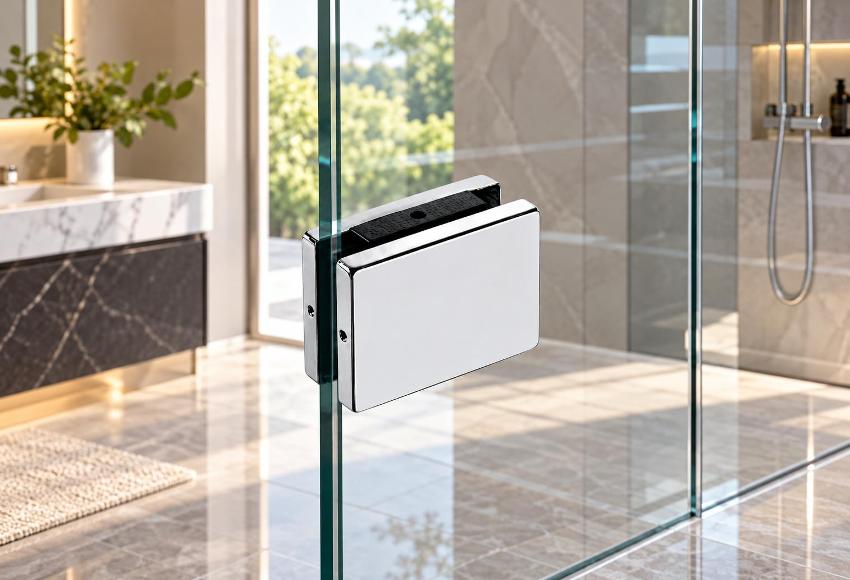
The hexagon socket screw system solves multiple problems simultaneously. Unlike Phillips or slotted screws, a hex socket provides six points of contact, distributing torque evenly and allowing higher tightening force without cam-out. This matters because under-torqued fasteners allow micro-movement, which generates noise and gradually enlarges the mounting hole in the glass.
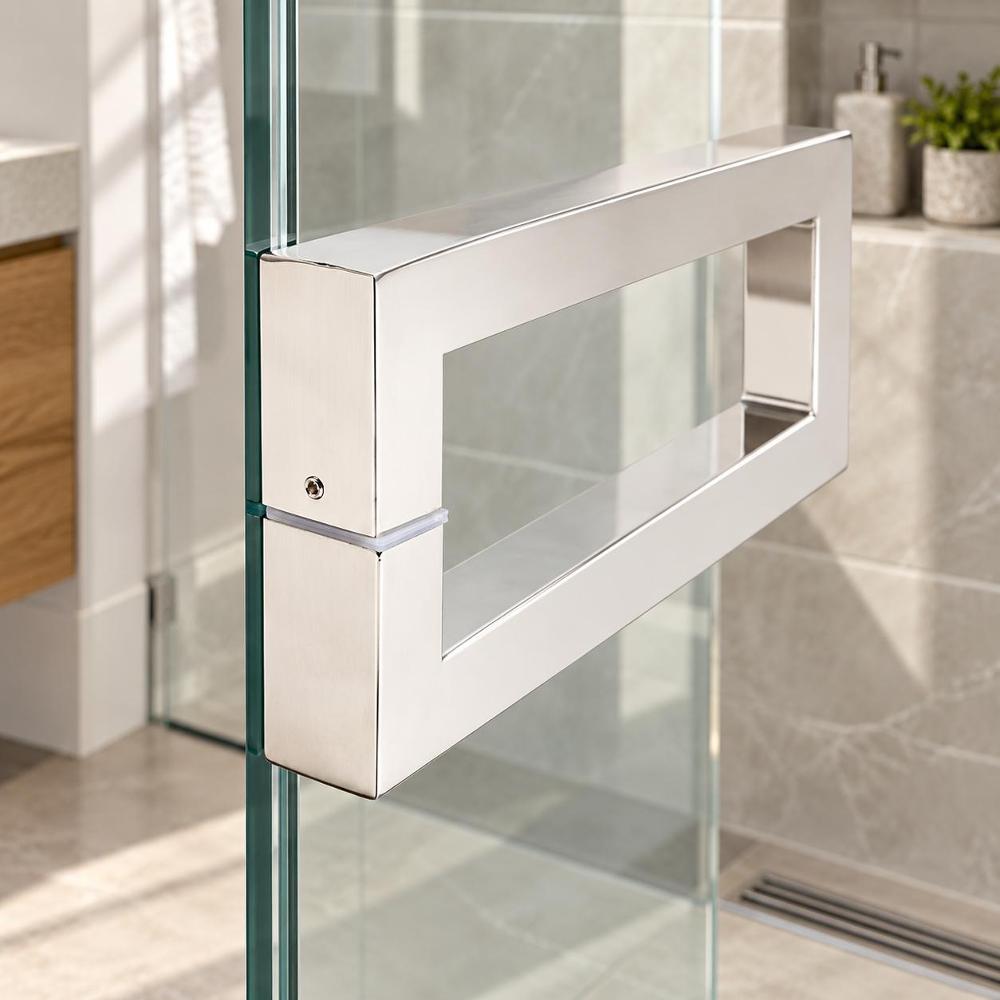
Split plastic gaskets at each mounting point serve a dual function. First, they create a compliant layer that absorbs differential expansion. Second, they increase the contact area between metal and glass, reducing peak stress. Without this gasket, even a perfectly machined metal surface creates point contacts at the microscopic level, where surface roughness concentrates force into spikes that exceed the glass’s tensile strength.
Anti-noise silicone pads address the resonance problem. When a handle moves, it excites vibrational modes in the glass panel. Tempered glass rings like a bell at frequencies between 200 and 800 Hz, depending on dimensions and edge constraints. A thin silicone layer damps these vibrations, cutting sound transmission by 15 to 20 decibels. This makes the difference between a handle that thuds and one that clicks.
Finish Options and Their Functional Consequences
Surface finish on an ss handle for glass door affects more than appearance. The electroplating and polishing processes alter surface hardness, friction coefficient, and corrosion resistance in ways that change how the hardware ages.
| Finish Type | Surface Hardness (HV) | Friction Coefficient | Chloride Resistance | Maintenance Frequency |
|---|---|---|---|---|
| PSS (Polished) | 180-220 | 0.45-0.55 | Moderate | Weekly |
| SSS (Satin) | 180-220 | 0.35-0.45 | Moderate | Bi-weekly |
| PVD Black | 1,500-2,500 | 0.25-0.35 | High | Monthly |
| PVD Titanium | 1,500-2,500 | 0.25-0.35 | Very High | Monthly |
Vacuum electroplating, particularly PVD (Physical Vapor Deposition), deposits a ceramic-like coating that increases surface hardness significantly. This coating resists scratching from rings and keys, but it changes the tactile experience. A polished stainless handle feels warm and slightly grippy. A PVD-coated handle feels cooler and slicker, which some users interpret as less secure, especially with wet hands.
Golden and titanium finishes use PVD to deposit titanium nitride or zirconium nitride, which provide color through optical interference rather than pigment. These coatings degrade under UV exposure in direct sunlight, shifting color over five to seven years. For interior applications, this degradation remains negligible, but south-facing glass doors in high-altitude locations show visible color shift within three years.
Installation Geometry and Load Distribution
The way an ss handle for glass door mounts to the panel determines how force transfers during operation. Most designs use a ladder-bar configuration: two mounting points separated by the handle length, creating a moment arm. When a user pulls, the door experiences both a lateral force and a bending moment around the hinges.
Glass thickness determines safe mounting parameters. For 10mm tempered glass, maximum recommended handle length runs 600mm with mounting points 450mm apart. Exceeding this creates enough bending stress to approach the glass’s modulus of rupture. For 12mm glass, this extends to 800mm handle length, and 15mm glass supports up to 1200mm commercial-grade pulls.
Edge distance matters more than most installers realize. Mounting holes drilled within 50mm of a glass edge concentrate stress into a region where tempering introduces residual tension. This region, called the edge zone, contains microcracks from cutting and polishing. Placing fasteners too close can cause spontaneous fracture days or weeks after installation, particularly during thermal cycling.
The double-sided mounting approach used in modern ss handle for glass door systems distributes load across both faces of the glass panel. Through-bolts create a clamping force that compresses the glass between two metal plates, converting tensile stress at the hole edge into compression. This increases the effective strength of the connection by roughly 40 percent compared to single-sided adhesive mounts.
Material Grades and Their Trade-Offs
Stainless steel comes in grades, and the choice between 201, 304, and 316 involves balancing cost, corrosion resistance, and mechanical properties. These differences matter most in environments where failure means replacement rather than refinishing.
Grade 201 substitutes manganese and nitrogen for nickel, reducing material cost by 30 to 40 percent. In dry interior environments, 201 performs adequately, maintaining its appearance and strength for years. However, its lower nickel content (around 4 to 5 percent) compromises passivation in humid or chloride-rich environments. Coastal installations using 201 show surface rust within 18 months.
Grade 304 represents the standard for architectural hardware. Its 8 to 10 percent nickel content forms a stable passive layer that self-heals after minor scratches. In most commercial and residential interiors, 304 provides sufficient corrosion resistance to outlast the building itself. The material cost sits roughly 50 percent above 201 but eliminates the maintenance burden of periodic refinishing.
Grade 316 adds 2 to 3 percent molybdenum, which dramatically improves resistance to pitting corrosion from chlorides. This makes 316 essential for marine environments, pool enclosures, and industrial settings where chemical exposure occurs. The material cost runs about 30 percent above 304, but the extended service life justifies this in high-exposure installations.
For us, offering all three grades allows matching material specification to actual service conditions rather than over-engineering every installation. A hotel bathroom 50 miles inland requires different metallurgy than a beachfront resort, and recognizing this distinction reduces both cost and environmental impact.
Design Geometry and Ergonomic Load
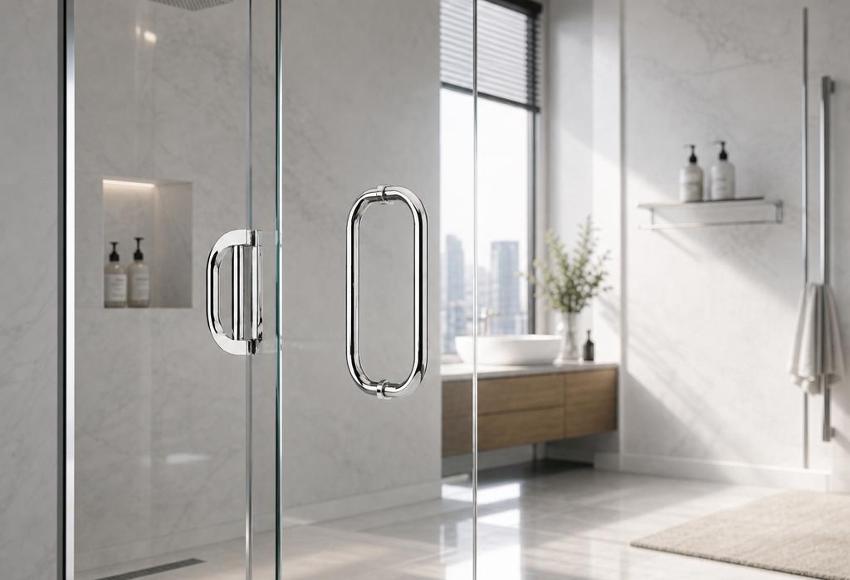
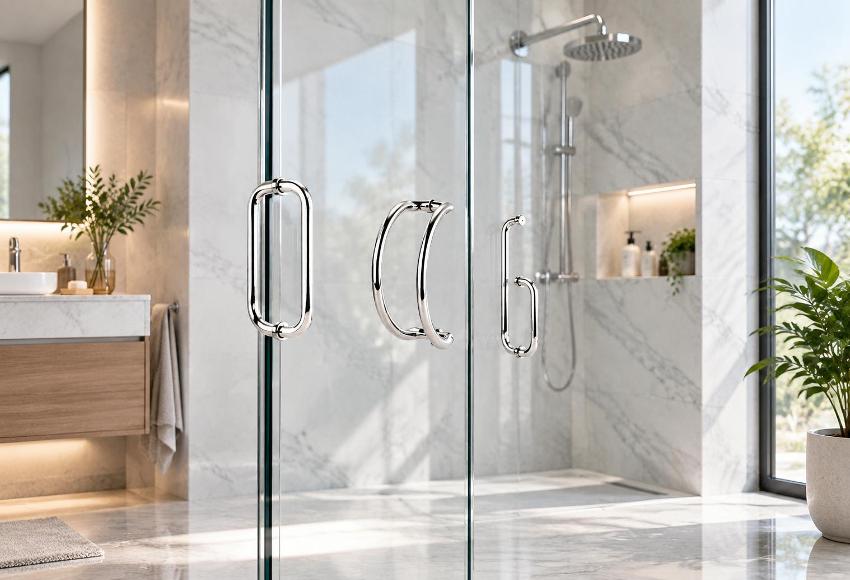
Handle profile affects grip force required to operate a door, which cascades through the entire door system. A cylindrical handle with 32mm diameter requires roughly 15 percent more grip force than a D-shaped or oval profile with equivalent cross-sectional area. This matters for accessibility compliance and long-term user comfort.
Modern ss handle for glass door designs incorporate subtle geometric features that reduce required force:
- Undercut profiles that allow fingers to wrap more completely around the handle
- Textured zones near the grip center that increase friction coefficient locally without affecting appearance
- Asymmetric cross-sections that provide visual cues for optimal hand placement
Square-profile handles create sharp edges that concentrate pressure on the palm and fingers. While these designs appeal aesthetically, they increase contact stress by roughly 40 percent compared to rounded profiles. For high-traffic commercial installations, this leads to user discomfort and contributes to premature finish wear at pressure points.
The tapered-end design, where the handle diameter reduces near the mounting points, serves both aesthetic and structural purposes. Visually, it creates a lighter appearance. Structurally, it moves material away from the mounting points, where stress concentration already exists, and redistributes it toward the handle center where bending moments peak during operation.
Application-Specific Considerations
Different environments impose different demands on an ss handle for glass door, and generic specifications often miss critical failure modes. Shower enclosures, for instance, combine high humidity, thermal cycling, soap residue, and occasional impact from towels or shower heads. This environment accelerates crevice corrosion at gasket interfaces and degrades silicone pads through chemical exposure.
Office glass partitions experience lower humidity but higher cycle counts. A commercial building entrance sees 500 to 1,000 door operations daily, accumulating 300,000 to 400,000 cycles annually. At this usage rate, fastener preload relaxation becomes the dominant failure mode. The hexagon socket screw system addresses this by allowing periodic retorquing without removing the handle, extending service life by two to three years compared to adhesive mounts.
Residential applications prioritize aesthetics and quiet operation over extreme durability. The anti-noise silicone pad makes the largest perceptible difference here, transforming door operation from an audible event to near silence. In open-plan homes where glass partitions separate living spaces without acoustic isolation, this noise reduction directly affects livability.
Industrial glass doors in cleanrooms or laboratories face chemical exposure from solvents, acids, and cleaning agents. Standard electroplated finishes degrade rapidly under repeated exposure to pH extremes. PVD coatings provide better chemical resistance, but even these fail against hydrofluoric acid or strong alkalis. For extreme chemical environments, handle selection must coordinate with glass type and sealing systems to avoid creating weak points in the enclosure.
Integration with Modern Door Systems
An ss handle for glass door rarely operates in isolation. It connects to hinges, closers, locks, and panic hardware, each with its own load path and failure modes. The handle’s mounting rigidity affects how force distributes through the entire assembly.
Soft-close mechanisms rely on hydraulic damping to decelerate the door before latching. If the handle mounting allows flex or movement, this flex absorbs energy that should dissipate in the closer, reducing damping effectiveness. A well-engineered handle with rigid mounting preserves closer performance, maintaining smooth deceleration across millions of cycles.
Lock integration presents mechanical challenges. Mortise locks require precise alignment between latch and strike plate, typically within 1.5mm. If the handle mounting introduces positional error, the lock binds or fails to latch reliably. The split gasket system addresses this by compressing uniformly, ensuring the handle mounts perpendicular to the glass without angular misalignment.
Panic hardware adds complexity because emergency egress requires overriding normal latching with minimal force. Building codes specify maximum release force, typically 15 pounds. If the handle mounting creates friction or binding, this force increases, potentially violating code and creating liability. Testing panic hardware function after handle installation verifies system integration rather than assuming compatibility.
Long-Term Performance and Maintenance Reality
Hardware degrades, and understanding the failure timeline allows intervention before catastrophic failure. An ss handle for glass door typically shows first wear signs between 50,000 and 100,000 cycles, depending on finish and environment. Polished surfaces show scratching first, while satin finishes develop burnished zones where fingers repeatedly contact metal.
Fastener loosening emerges as the most common maintenance issue. Temperature cycling expands and contracts both glass and metal, gradually reducing preload on mounting screws. This manifests as rattling or visible movement during operation. Retorquing screws every 18 to 24 months in commercial installations prevents progression to gasket damage or glass cracking.
Gasket degradation follows material-specific patterns. Silicone pads compress permanently under load, losing about 15 percent of their thickness over five years. This reduces their damping effectiveness, allowing noise to return gradually. Plastic split gaskets become brittle with UV exposure, cracking after seven to ten years in direct sunlight. Indoor installations show minimal gasket degradation over 15 years.
Corrosion, when it occurs, typically starts at crevices where moisture accumulates and oxygen cannot circulate to reform the passive layer. Regular cleaning with pH-neutral soap removes chloride-containing residues before they concentrate to corrosive levels. Avoid abrasive cleaners or chlorinated solutions, which scratch the surface and accelerate localized corrosion.
The warranty period of one year covers manufacturing defects but rarely captures long-term durability issues that emerge from improper installation or environmental mismatch. Selecting appropriate material grade and finish for the actual service environment matters more than warranty duration in predicting real-world performance.
-

SS Handle for Glass Door: Engineering Precision Behind a Simple Pull
13-10-2026 -
Double Swing Glass Door Lock: Hardware Selection for Commercial and Residential Installations
12-10-2026 -
Frameless Glass Door Lock: Engineering Precision for Modern Access Control
11-10-2026 -
Frameless Shower Door Clips: Hardware That Holds the Line Between Function and Failure
10-10-2026 -
Stainless Steel Glass Door Lock: Engineering for Frameless Installations
09-10-2026
-

Why Do Shower Glass Door Hinges Fail and How to Prevent It?
18-03-2026 -

Do Framed Shower Door Hinges Rust Over Time and How Can You Prevent It?
17-03-2026 -
What Are the Best Shower Door Hinges for Glass-to-Glass Installations?
14-03-2026 -
Why Do Some Frameless Glass Shower Door Hinges Fail and How to Prevent It?
13-03-2026 -
How Do Frameless Shower Screen Hinges Affect Durability and Safety?
12-03-2026