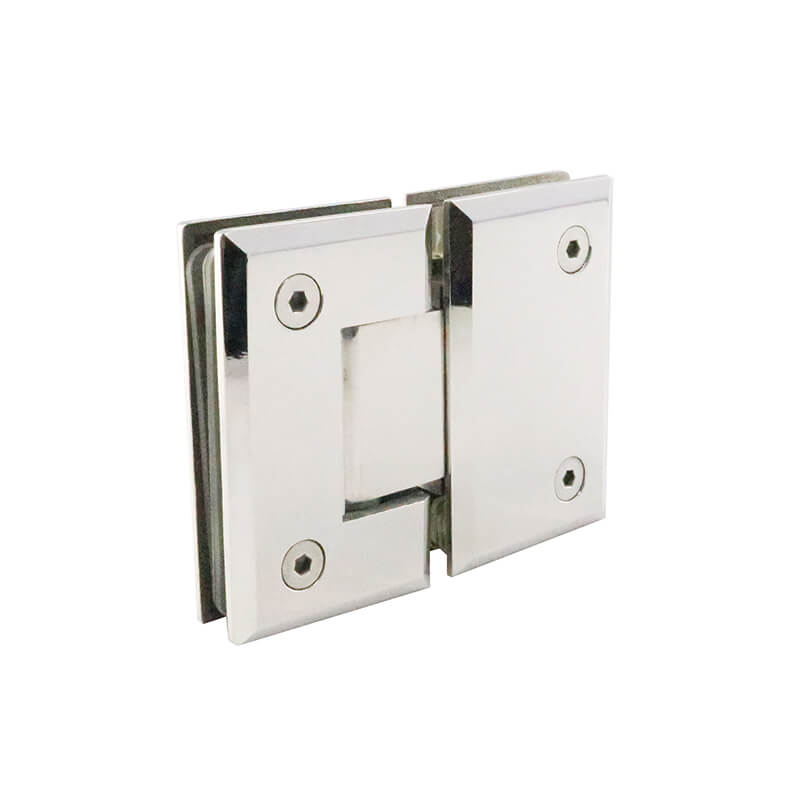
Double Swing Glass Door Lock: Hardware Selection for Commercial and Residential Installations
Specifying hardware for double swing glass doors requires understanding how the lock mechanism distributes stress across two independently moving panels. Unlike single-door configurations where the frame absorbs most lateral force, swing doors rely on the lock body itself to maintain alignment and resist deflection during repeated opening cycles. A poorly chosen lock introduces play between panels, accelerates glass edge chipping, and creates acoustical gaps that compromise both security and climate control.
The challenge intensifies in frameless installations. Without metal framing to carry shear loads, the glass becomes a structural element. Lock hardware must clamp securely without inducing point stress that propagates microfractures, while still allowing the thermal expansion cycles that tempered glass undergoes daily. This dual requirement explains why generic door locks fail prematurely in glass applications: they either grip too loosely and allow wobble, or clamp too tightly and crack the panel within months.
Lock Body Construction and Load Distribution
Cast iron cores paired with cold-rolled steel housings form the foundation of durable glass door locks. Cast iron absorbs vibration and provides the mass needed to resist torsional forces when one door closes before the other. Cold-rolled steel offers corrosion resistance and dimensional stability across temperature swings. The combination prevents the warping that occurs in lightweight alloy bodies, where seasonal humidity changes cause misalignment between strike and latch.
One-piece molded housings eliminate the internal stress points found in welded or bolted assemblies. Under repeated impact from door closures, welded seams develop hairline separations that admit moisture. Once corrosion starts inside the lock body, the mechanism binds during operation. Molded construction also simplifies gasket integration, creating a continuous seal around the perimeter rather than relying on multiple compression points.
Fastener selection matters more than most installation guides acknowledge. Standard Phillips-head screws allow removal with common tools, making the lock vulnerable to opportunistic tampering. Hexagon socket cap screws require specialized drivers and provide greater thread engagement. The increased contact area between screw threads and the steel housing distributes clamping force more evenly across the glass edge, reducing localized pressure that can initiate edge cracks.
Glass Thickness Compatibility and Edge Preparation
The 8-12mm thickness range encompasses most tempered glass used in commercial and residential swing doors. Thinner glass lacks the stiffness to resist flexing under lock operation, while thicker panels require oversized hardware that creates visual imbalance. Within this range, lock bodies use adjustable clamping plates that accommodate variations without requiring different models for each glass thickness.
Edge preparation determines whether the glass will survive long-term clamping loads. Seamed edges, which receive only minimal grinding, contain microscopic irregularities that concentrate stress under the lock’s grip. Polished edges distribute pressure more uniformly, and pencil-polished edges with a slight radius eliminate the sharp transition between glass face and edge, preventing the stress concentration zones where cracks originate.
Drilling precision affects both security and longevity. Lock mounting holes drilled off-center by even two millimeters force the clamping plates to sit at an angle, creating uneven pressure distribution. Tempered glass cannot be drilled after tempering, so hole placement errors require panel replacement. Manufacturers who provide drilling templates reduce this risk, but field verification with digital calipers before installation catches template printing errors.
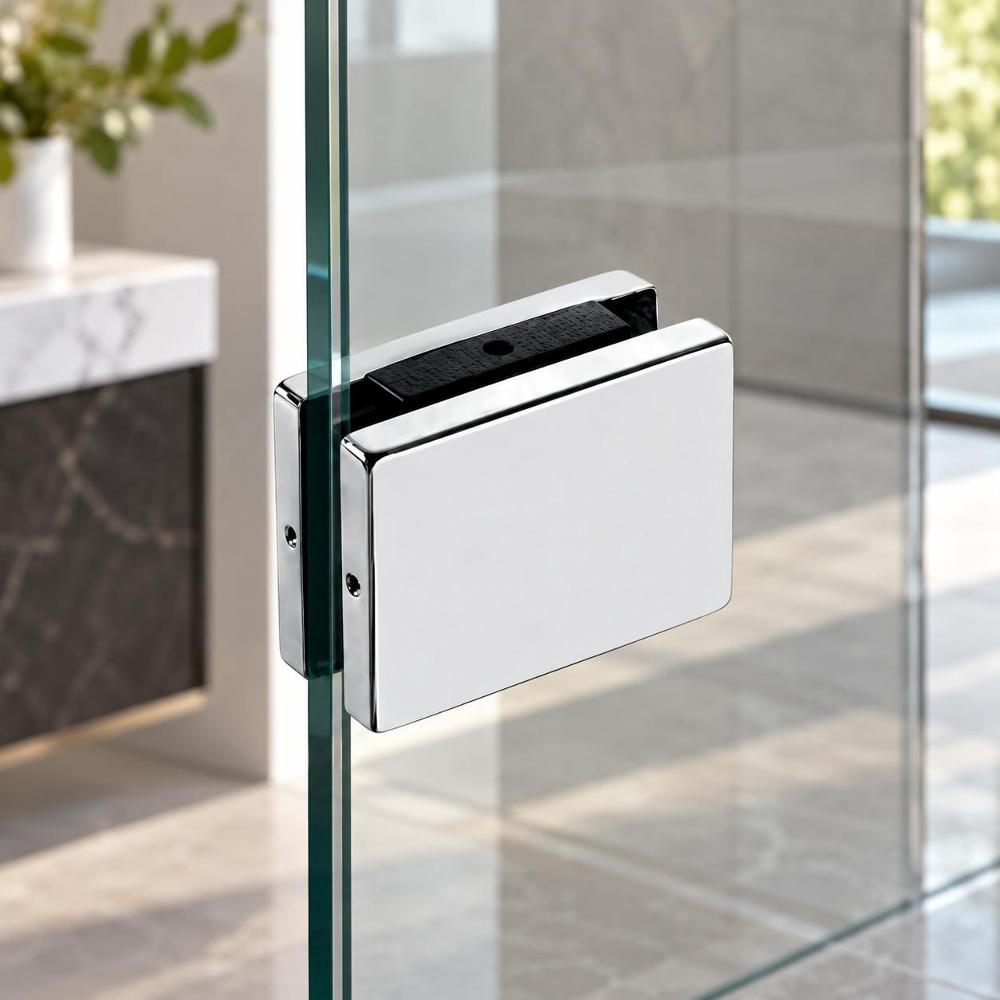
Latch Mechanisms and Operational Silence
Multi-point latching systems spread the securing force across several contact points rather than concentrating it at a single strike. In double swing configurations, this becomes critical. The door that closes first must remain stationary while the second door latches, without assistance from a floor bolt or header pin. Single-point latches allow the first door to shift slightly, preventing the second from aligning properly. Three-point systems anchor the door at top, middle, and bottom, maintaining position even under wind load or HVAC pressure differentials.
Acoustic performance separates commercial-grade hardware from residential options. Metal-on-metal contact during latching generates the sharp click associated with institutional doors. Elastomeric bumpers at each strike point absorb impact energy, producing the muted sound expected in hospitality or residential settings. The elastomer must resist permanent compression, which causes the cushioning effect to fade within months. Silicone compounds maintain their rebound properties longer than cheaper rubber formulations.
Latch bolt geometry influences both security and operational smoothness. Beveled bolts allow doors to self-latch when pushed closed, but the bevel angle must match the strike plate precisely. Too steep, and the bolt rides up over the strike under pressure. Too shallow, and excessive force is required to engage the latch. Bevel angles typically range from 10 to 20 degrees depending on the specific lock design and installation tolerances.
Corrosion Resistance in Moisture-Prone Environments
Stainless steel grades determine how the hardware performs in humid conditions. Type 201 offers basic corrosion resistance suitable for climate-controlled interiors with minimal moisture exposure. Type 304 provides moderate protection and handles condensation from temperature differentials, making it appropriate for entrance doors with occasional weather exposure. Type 316 contains molybdenum for superior resistance to chloride-induced pitting, necessary in coastal installations or pool enclosures.
Surface finish interacts with corrosion resistance in ways that affect long-term appearance. Polished stainless steel (PSS) creates a mirror finish that shows water spots and fingerprints readily but allows easy cleaning. Satin stainless steel (SSS) diffuses reflected light and hides minor surface marks better, though it requires more aggressive cleaning agents to remove embedded contaminants. Physical vapor deposition (PVD) coatings in black, gold, or titanium add a ceramic layer that protects the base metal while maintaining the chosen aesthetic.
Internal components require equal attention to corrosion protection. Springs, pins, and latch bolts operate in the enclosed lock body where moisture accumulates through temperature cycling. Untreated steel components rust within the sealed environment, causing the mechanism to seize. Zinc plating provides basic protection, but nickel plating or stainless construction ensures long-term function in applications where the door serves as a thermal barrier between conditioned and unconditioned spaces.
Installation Considerations for Frameless Applications
Vertical alignment between the two doors determines whether the lock will engage smoothly. Glass panels suspended from overhead pivots tend to sag over time as pivot bushings wear. If the doors start at the same height but one drops three millimeters while the other remains level, the latch and strike will no longer mate properly. Adjustable pivots with vertical positioning screws allow periodic realignment without removing the doors.
The relationship between door width and lock position affects operational effort. Locks mounted near the meeting edge reduce the moment arm, requiring less force to overcome the latch spring when opening. However, this places the hardware in the area most likely to receive impact from carts, luggage, or other objects passing through the opening. Center-mounted locks move the mechanism away from the traffic path but increase the force needed to operate the door, particularly problematic for accessibility compliance.
Floor clearance interacts with lock performance in ways that become apparent only after installation. Doors with excessive bottom clearance allow air pressure differentials to push them open even when latched, if the lock’s holding force is marginal. Insufficient clearance causes the door bottom to drag across flooring, introducing vibration that travels up through the glass to the lock body. A 6-10mm gap provides adequate clearance for most installations.
Security Performance and Access Control Integration
Lock cylinders designed for glass doors must resist the torque attacks possible when the door itself provides no mechanical advantage for prying. Standard residential cylinders can fail when subjected to the rotational force an intruder can apply using the door edge as a lever. Commercial-grade cylinders use hardened pins and anti-drill plates to resist both drilling and torque attacks. Some incorporate clutch mechanisms that allow the exterior cylinder to spin freely when attacked while keeping the interior mechanism locked.
Electromagnetic integration requires planning during the specification phase. Mortise locks that accommodate electric strikes allow remote release for access control systems, but the strike must be powered continuously to remain unlocked. Magnetic locks provide strong holding force and fail-secure operation, but require separate header mounting and draw more power. For double swing doors, electromagnetic coordination ensures both panels release simultaneously rather than creating the awkward situation where one door remains locked.
Panic hardware compatibility becomes mandatory in commercial applications governed by egress codes. Touchbar mechanisms must actuate both doors with a single push, retracting all latch points simultaneously. This requires coordination bars that mechanically link the two lock bodies, adding complexity but ensuring code compliance. The coordination bar must tolerate the differential thermal expansion between the two glass panels without binding.
Maintenance Protocols and Component Longevity
Lubrication schedules prevent the gradual degradation that occurs when metal components operate without proper film separation. Lock mechanisms require dry lubricants rather than oils, which attract dust and form abrasive paste. PTFE-based sprays maintain lubricity without accumulating contaminants. Application every six months prevents the wear that causes latches to stick and keys to bind.
Glass edge inspection catches developing problems before they require panel replacement. Fine cracks originating at mounting holes propagate slowly, remaining invisible until they reach sufficient length to suddenly extend across the panel. Quarterly examination with a loupe or macro photography identifies hairline cracks early enough for remediation. Replacing a lock body costs considerably less than replacing the entire glass panel.
Hardware adjustment maintains the tight fit that new installations exhibit. Temperature cycles, building settlement, and mechanical wear gradually introduce play between components. Annual adjustment of clamping tension, strike alignment, and latch engagement keeps the system operating as designed. Deferring adjustment allows misalignment to worsen until components contact at incorrect angles, accelerating wear and compromising security.
Material Selection for Specific Operating Environments
Marine environments demand the chloride resistance that only type 316 stainless provides. Salt air penetrates even indoor spaces in coastal buildings, attacking hardware through atmospheric deposition rather than direct water contact. Type 304 develops surface rust within months in these conditions, while type 316 maintains appearance and function for years. The material premium is small compared to the replacement cost of corroded hardware.
High-traffic commercial installations see mechanical wear that residential locks never experience. Office buildings, retail entries, and hotel common areas subject locks to hundreds of cycles daily. Under this duty cycle, stamped components fatigue and break, while machined parts maintain dimensional accuracy. Investment in commercial-grade hardware eliminates the recurring replacement costs associated with residential-rated products used beyond their design intent.
Temperature extremes require materials that maintain properties across the operating range. In unheated warehouse applications or exterior installations, lubricants must remain fluid at low temperatures while not migrating at high temperatures. Spring temper must not relax in heat or become brittle in cold. Hardware specified for the actual operating conditions avoids the failures that occur when interior-rated products face exterior environments.
Selecting a double swing glass door lock involves matching construction quality, material grade, and mechanical design to the specific demands of the installation. Products like the frameless glass door locking hardware from Sateer demonstrate the engineering necessary for reliable performance: cast iron cores for vibration damping, cold-rolled steel housings for corrosion resistance, and hexagon socket fasteners for secure installation. Proper specification considers glass thickness compatibility, environmental exposure, traffic patterns, and integration requirements from the beginning rather than discovering limitations after installation.
-

Double Swing Glass Door Lock: Hardware Selection for Commercial and Residential Installations
12-10-2026 -
Frameless Glass Door Lock: Engineering Precision for Modern Access Control
11-10-2026 -
Frameless Shower Door Clips: Hardware That Holds the Line Between Function and Failure
10-10-2026 -
Stainless Steel Glass Door Lock: Engineering for Frameless Installations
09-10-2026 -
Glass Door Clips: What Actually Holds a Frameless Shower Together
08-10-2026
-

Why Do Shower Glass Door Hinges Fail and How to Prevent It?
18-03-2026 -

Do Framed Shower Door Hinges Rust Over Time and How Can You Prevent It?
17-03-2026 -
What Are the Best Shower Door Hinges for Glass-to-Glass Installations?
14-03-2026 -
Why Do Some Frameless Glass Shower Door Hinges Fail and How to Prevent It?
13-03-2026 -
How Do Frameless Shower Screen Hinges Affect Durability and Safety?
12-03-2026