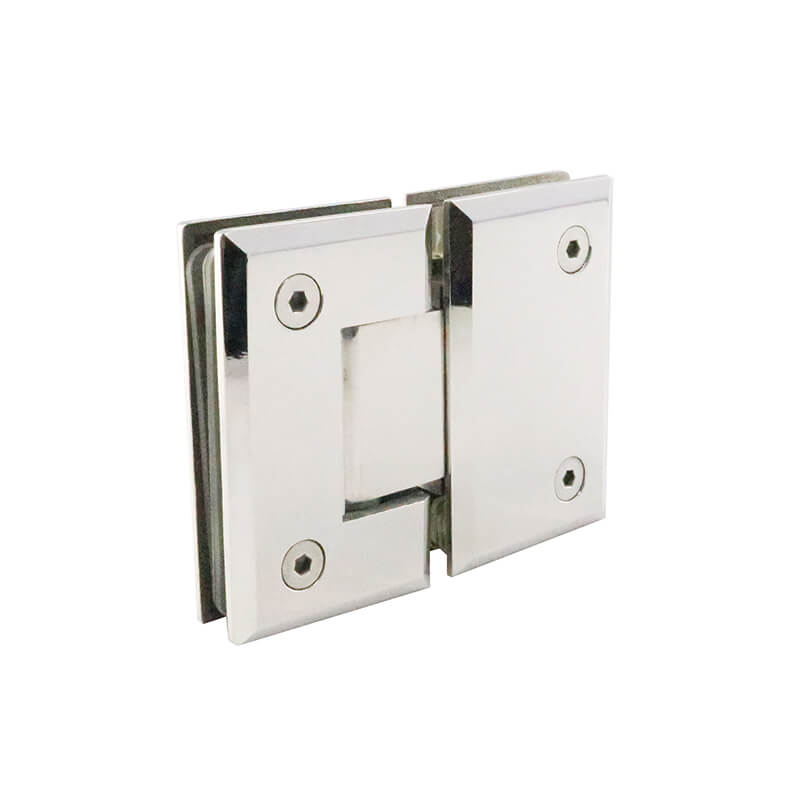
What Are the Best Shower Door Hinges for Glass-to-Glass Installations?
When designing a modern, luxurious bathroom, few elements rival the sleek aesthetic of a frameless glass shower enclosure. By eliminating bulky metal frames, these showers create a sense of open space, allowing beautiful tile work and the clean lines of the glass to take center stage. However, the success of a frameless shower hinges entirely on one critical component: the hardware. Specifically, when you are joining two panels of glass together—such as a fixed panel and a door, or a corner entry—the hinges you choose are paramount.
Glass-to-glass installations are distinct from glass-to-wall installations. They require specialized hinges that clamp onto two separate pieces of tempered glass, holding them together while allowing the door to swing freely. Choosing the right hinge is not just about aesthetics; it is a critical safety and functionality decision. The wrong hinge can lead to sagging, misalignment, or, in a worst-case scenario, glass failure.

So, what are the best shower door hinges for glass-to-glass installations? The answer depends on a combination of factors including design preference, glass thickness, weight capacity, and adjustability. Here is a comprehensive guide to the best types of hinges available on the market today.
1. The Anatomy of a Glass-to-Glass Hinge
Before diving into the “best” types, it is essential to understand how these hinges work. Unlike a standard door hinge that screws into a wooden frame, a glass-to-glass hinge uses a clamping mechanism. It consists of two main parts—typically two “leaves”—that sandwich the glass. These leaves are held together by through-bolts that pass through pre-drilled holes in the glass panels or, in some cases, clamp onto the glass without drilling (though drilled hinges are generally considered more secure for doors).
High-quality hinges are almost exclusively made from solid brass, which is then plated with finishes like chrome, brushed nickel, or oil-rubbed bronze. Solid brass is preferred because it is corrosion-resistant, strong, and does not rust like cheaper metals.
2. Types of Glass-to-Glass Hinges
When shopping for your shower enclosure, you will encounter several distinct styles of hinges. The best choice for you will depend on the layout of your shower and the look you want to achieve.
Quarter-Turn Hinges
Quarter-turn hinges are a popular choice for their minimalist design and robust performance. As the name implies, these hinges allow the door to open a full 90 degrees (a quarter turn) in one direction. They are typically used for standard shower doors that swing inward or outward. The best quarter-turn hinges feature a concealed bearing mechanism. This bearing allows the heavy glass door to swing smoothly without grinding metal-on-metal, ensuring longevity and silent operation. They offer a clean, modern look with very little visible hardware other than the sleek barrel.
Pivot Hinges
While often used for glass-to-wall installations, pivot hinges are also available for glass-to-glass applications. A pivot hinge allows the door to swing in both directions (double-action) if desired, or in a single direction. In a glass-to-glass setup, one pivot is mounted at the top of the glass panel and one at the bottom. Because the weight of the door is distributed to the top and bottom, pivot hinges are excellent for very heavy, tall pieces of glass. They provide a very stable swing but require precise alignment during installation.
Continuous Hinges (Piano Hinges)
For a very specific, industrial-chic look, continuous hinges run the entire vertical length of the glass door. While less common in residential showers, they are sometimes used in commercial or high-end custom designs. They offer maximum support along the entire seam but can be visually heavy compared to the minimalist look of discrete hinges.
Offset Hinges
In a standard glass-to-glass corner installation, the hinge is usually mounted at the edge of the fixed panel and the edge of the door, allowing them to sit flush when closed. However, offset hinges are designed to move the door away from the fixed panel slightly. This is particularly useful if the door needs to clear an obstruction, such as a large valve handle or a body spray, or if you want the door to fold back flat against the outside of the shower.
3. Key Features to Look for in “Best” Hinges
Determining the “best” hinge goes beyond just the type. You must evaluate the technical specifications.
a. Glass Thickness Compatibility
Shower doors typically use 3/8″ (10mm) or 1/2″ (12mm) tempered glass. Heavier, more luxurious installations often use the thicker 1/2″ glass. The best hinges are specifically rated for the thickness of your glass. Using a hinge designed for 3/8″ glass on a 1/2″ panel will either not fit or will not clamp securely, leading to disaster.
b. Weight Capacity
A piece of 1/2″ glass is incredibly heavy. A standard shower door can weigh anywhere from 80 to 150 pounds (36 to 68 kg). The hinge must be rated to hold this weight over years of daily use. Look for hinges with a high weight capacity and a robust clamping mechanism.
c. Adjustability
Glass walls and floors are rarely perfectly plumb and level. The best hinges offer 3-D adjustability. This means they can be fine-tuned after the glass is hung to ensure the door sits perfectly level, with even gaps (reveals) around the edges. Look for hinges with built-in adjustment cams or set screws that allow you to move the door up/down, left/right, and in/out.
d. Material and Finish
Never compromise on material. As mentioned, look for solid brass construction. Stainless steel is also acceptable, but high-grade brass is easier to machine and provides a smoother operation. The finish should be electroplated to prevent peeling, corrosion, and fading in the humid shower environment.
4. Glass-to-Glass vs. Glass-to-Wall: Why the Distinction Matters
It is important to distinguish these hinges from glass-to-wall hinges. Glass-to-wall hinges are designed to attach a swinging door to a stationary side panel that is itself anchored to a wall. In a glass-to-glass installation, the fixed panel is not anchored to a wall; it is standing freely, held in place by a support bar at the top or a U-channel at the bottom, and the hinge connecting it to the door provides crucial structural integrity.
Therefore, the hinges in a glass-to-glass setup must be stronger. They must transfer the load and momentum of the swinging door through the hinge and into the fixed panel. This is why cheaper, flimsy hinges have no place in this type of installation.
5. Installation Considerations
Installing glass-to-glass hinges is not a DIY project for most homeowners. It requires handling heavy panels of tempered glass and aligning them with extreme precision. However, understanding the process helps you appreciate the quality of the hardware.
The process generally involves:
Positioning the Glass: The fixed panel is set in place, secured by a headrail or floor clip.
Dry Fitting: The door panel is propped up and aligned with the fixed panel to mark the hinge locations.
Mounting the Hinges: The hinges are disassembled. The first leaf is attached to the fixed panel using the through-bolts and rubber gaskets (which protect the glass from metal-to-glass contact).
Hanging the Door: The door is maneuvered into place, and the second leaf of the hinge is attached. The gaskets are tightened evenly.
Adjustment: The critical final step. Using the built-in adjustability of the hinge, the door is leveled, and the gaps are set perfectly.
Conclusion
The best shower door hinges for glass-to-glass installations are those that combine robust engineering with flawless design. They must be strong enough to bear the immense weight of heavy glass, adjustable enough to accommodate real-world installation variances, and beautiful enough to complement the bathroom’s design. Whether you opt for the smooth motion of a quarter-turn hinge or the stability of a pivot system, never sacrifice quality for cost.
For discerning homeowners and professionals who demand the perfect blend of durability, precision, and style, Sateer offers an exceptional range of glass-to-glass hinges. Engineered from high-grade solid brass and featuring advanced 3-D adjustability, Sateer hinges ensure your shower door operates flawlessly for years to come. With a variety of luxurious finishes to match any decor, Sateer hardware provides the confidence and elegance that a premium frameless shower enclosure deserves. When you choose Sateer, you aren’t just buying a hinge; you are investing in the safety, functionality, and beauty of your bathroom.
-

SS Handle for Glass Door: Engineering Precision Behind a Simple Pull
13-10-2026 -
Double Swing Glass Door Lock: Hardware Selection for Commercial and Residential Installations
12-10-2026 -
Frameless Glass Door Lock: Engineering Precision for Modern Access Control
11-10-2026 -
Frameless Shower Door Clips: Hardware That Holds the Line Between Function and Failure
10-10-2026 -
Stainless Steel Glass Door Lock: Engineering for Frameless Installations
09-10-2026
-

Why Do Shower Glass Door Hinges Fail and How to Prevent It?
18-03-2026 -

Do Framed Shower Door Hinges Rust Over Time and How Can You Prevent It?
17-03-2026 -
What Are the Best Shower Door Hinges for Glass-to-Glass Installations?
14-03-2026 -
Why Do Some Frameless Glass Shower Door Hinges Fail and How to Prevent It?
13-03-2026 -
How Do Frameless Shower Screen Hinges Affect Durability and Safety?
12-03-2026