Glass Door Handles: Choosing Hardware That Balances Grip, Safety, and Style
Glass doors look effortless until the hardware fails. A wobbly handle, a scratched panel, or a screw that backs out after six months of use turns a sleek entrance into a maintenance headache. Glass door handles carry more responsibility than their slim profile suggests. They anchor a heavy, brittle surface, they take constant hand contact, and they often sit in full public view where every flaw shows.
Choosing the right handle isn’t about picking whatever looks polished in a catalog photo. It’s about matching the hardware to the glass thickness, the traffic level, and the environment the door lives in. A shower room handle faces different demands than one on a hotel lobby door. Getting this wrong costs money twice: once on the hardware, and again when it’s replaced.
Why Glass Doors Are Harder on Hardware Than You’d Think
Glass doesn’t flex the way wood or metal frames do. Any stress from a poorly seated handle concentrates at the mounting point instead of spreading across the panel. That’s why cheap handles crack glass edges or loosen within months, even when the glass itself is rated for heavy use.
There’s also the matter of direct metal-to-glass contact. Without a buffer, a rigid handle base can create micro-scratches every time the door swings or someone leans on it. Over time those scratches turn into stress points, and stress points are where glass eventually fails. This is less about dramatic breakage and more about slow, invisible wear that shows up as hairline cracks near the edges.
Humidity adds another layer of difficulty, particularly in bathrooms and shower enclosures. Metal hardware exposed to constant moisture corrodes faster than most people expect, and once rust starts on a handle, it stains the glass around it permanently.
What Actually Matters When Selecting a Handle
Instead of judging a handle by finish alone, it helps to break the decision into a few concrete factors. Each one maps directly to a problem you’d otherwise run into after installation.
- Material grade: Stainless steel grades vary widely, and the difference shows up in how long a handle resists pitting and discoloration in wet environments.
- Glass compatibility: Handles are engineered for a specific glass thickness range. Mismatched hardware either won’t clamp securely or will over-tighten and stress the panel.
- Contact buffering: A gasket or cushion layer between metal and glass absorbs vibration and prevents scratching during normal use.
- Mounting security: The screws and mounting feet determine whether the handle stays rigid over years of pulling, or starts to wobble after a few seasons.
- Grip geometry: The shape of the handle affects comfort for repeated use, especially in commercial settings with high foot traffic.
None of these factors work in isolation. A handle can have excellent steel and still fail if the mounting hardware is undersized for the door weight.
A Closer Look at Back-to-Back Glass Door Handle Construction
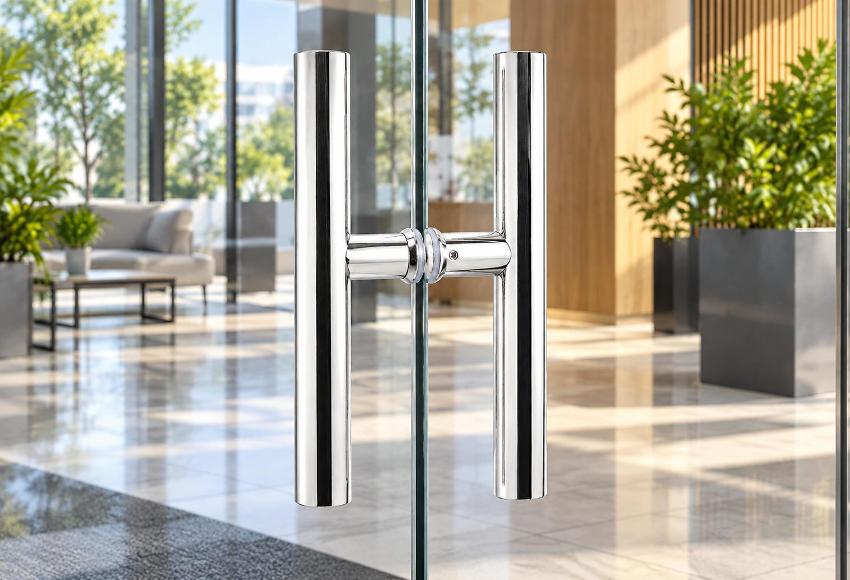
Back-to-back glass door handles are one of the more common formats for frameless or semi-frameless glass doors, since they clamp from both sides of the panel and distribute load evenly. A well-built example from Sateer’s lineup illustrates how these design factors come together in practice.
The handle is built from thickened 304 stainless steel, a grade the manufacturer specifies for its resistance to corrosion and rust in humid or high-traffic settings. This matters most in shower rooms and hotel bathrooms, where lesser alloys tend to show spotting or discoloration within a year.
Between the metal and the glass, buffered silicone gaskets sit as a cushioning layer. Rather than letting steel bear directly against the panel, the gasket absorbs the everyday knocks and twisting motion that come from pulling a door open repeatedly. This is a small detail, but it’s the one that quietly prevents the hairline scratching problem described earlier.
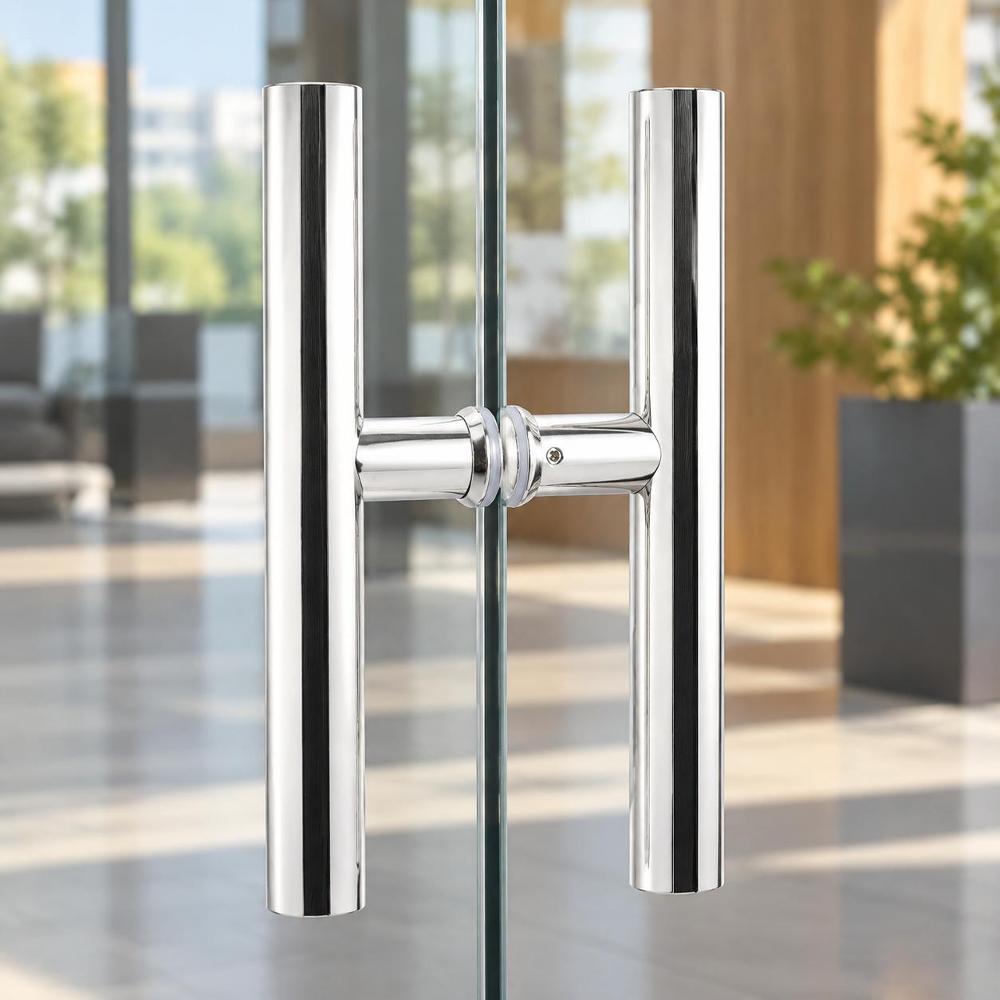
On the mounting side, the design uses anti-shedding tapered feet paired with fixed sleeves and hexagon socket head screws. Tapered feet resist loosening under repeated pulling force, and the fixed sleeve keeps the screw aligned so it doesn’t strip the mounting hole over time. This combination is what separates a handle that stays tight for years from one that needs re-tightening every few months.
The grip itself follows an I-shaped profile, which spreads hand pressure more evenly across the palm than a thin round bar. For doors that get opened hundreds of times a day, in offices or hotel corridors, that even distribution reduces hand fatigue in a way that’s easy to underestimate until you compare it side by side with a narrower handle.
Matching Handle Specs to Your Door
Glass thickness compatibility is one of the most overlooked specs during purchasing, yet it determines whether a handle will even fit correctly. Below is a simple reference for how key specifications typically align with common installation needs.
| Specification | Detail | Why It Matters |
|---|---|---|
| Material | 304 Stainless Steel | Resists rust and corrosion in humid environments |
| Glass Thickness Range | 8–12mm | Must match your door panel for a secure clamp |
| Mounting Hardware | Tapered feet, hexagon socket screws | Prevents loosening and unauthorized removal |
| Surface Finish | PSS (Polished Stainless Steel) | Maintains appearance in visible, high-traffic areas |
| Typical Warranty | 1 Year | Reflects standard commercial hardware coverage |
If your glass panel falls outside the 8–12mm range, the handle either won’t seat properly or will apply uneven clamping pressure, both of which shorten the hardware’s usable life.
Where This Style of Handle Makes the Most Sense
Back-to-back handles show up most often in settings where the door needs to look clean from both directions and withstand frequent use without maintenance callbacks.
- Hotel glass doors, where guests judge build quality by touch as much as by sight, and a loose handle reflects poorly on the whole property.
- Shower rooms, where moisture exposure is constant and corrosion resistance becomes the deciding factor over aesthetics alone.
- Office glass partitions and doors, where high daily traffic makes mounting security and grip comfort more important than in low-use residential settings.
In each case, the environment dictates which spec matters most. A hotel might prioritize finish consistency across dozens of doors, while a shower room installation leans harder on gasket quality and stainless steel grade.
Common Questions About Glass Door Handles
Do glass door handles work on any glass thickness?
No. Each handle model is built for a specific range, commonly 8–12mm for back-to-back designs. Installing outside that range risks a loose fit or excess stress on the glass edge.
Why do some handles scratch the glass over time?
This usually happens when there’s no cushioning layer between the metal base and the glass surface. A silicone gasket, like the ones used in buffered handle designs, prevents this direct contact.
Are stainless steel handles enough to prevent rust in wet areas?
Not all stainless steel performs equally. Thickened 304-grade steel offers meaningfully better corrosion resistance than thinner or lower-grade alternatives, which is why it’s commonly specified for shower and bathroom hardware.
Can these handles be removed easily for theft or vandalism?
Designs using tapered feet with fixed sleeves and hexagon socket screws are built to resist loosening and unauthorized disassembly, which is a common concern in public or commercial spaces.
Making the Final Call
Picking hardware for a glass door isn’t a decorative decision, even though it often gets treated like one. The right glass door handle needs to match your glass thickness, survive your environment’s humidity level, and hold up under whatever traffic volume your space generates. Skimping on any of these leads to the same outcome: a handle that looks fine in the showroom and fails within a year on site.
For anyone weighing options, it helps to start with the environment first, then work backward to material grade and mounting design. Shower rooms call for corrosion resistance above all else. Offices call for mounting security and comfort under repeated use. Hotels tend to need a bit of both, plus consistent finish across many units.
Sateer has spent over three decades manufacturing door control hardware, including glass door handles and related glass door locks, with a focus on the kind of structural details, like buffered gaskets and anti-shedding mounting feet, that determine whether hardware lasts. Whether you’re specifying handles for a single shower enclosure or fitting out an entire hotel floor, the underlying decision is the same: match the hardware’s build to the door’s real-world demands, not just its appearance.
-

Glass Door Clips: What Actually Holds a Frameless Shower Together
08-10-2026 -
Sliding Door Rollers: How to Choose the Right Wheel System for Frameless Glass
08-10-2026 -
Shower Door Hinges: How to Choose the Right Hardware for Frameless Glass Doors
08-10-2026 -
Glass Door Locks: What Frameless Glass Actually Needs to Stay Secure
08-10-2026 -
Glass Door Handles: Choosing Hardware That Balances Grip, Safety, and Style
08-10-2026
-

Why Do Shower Glass Door Hinges Fail and How to Prevent It?
18-03-2026 -

Do Framed Shower Door Hinges Rust Over Time and How Can You Prevent It?
17-03-2026 -
What Are the Best Shower Door Hinges for Glass-to-Glass Installations?
14-03-2026 -
Why Do Some Frameless Glass Shower Door Hinges Fail and How to Prevent It?
13-03-2026 -
How Do Frameless Shower Screen Hinges Affect Durability and Safety?
12-03-2026