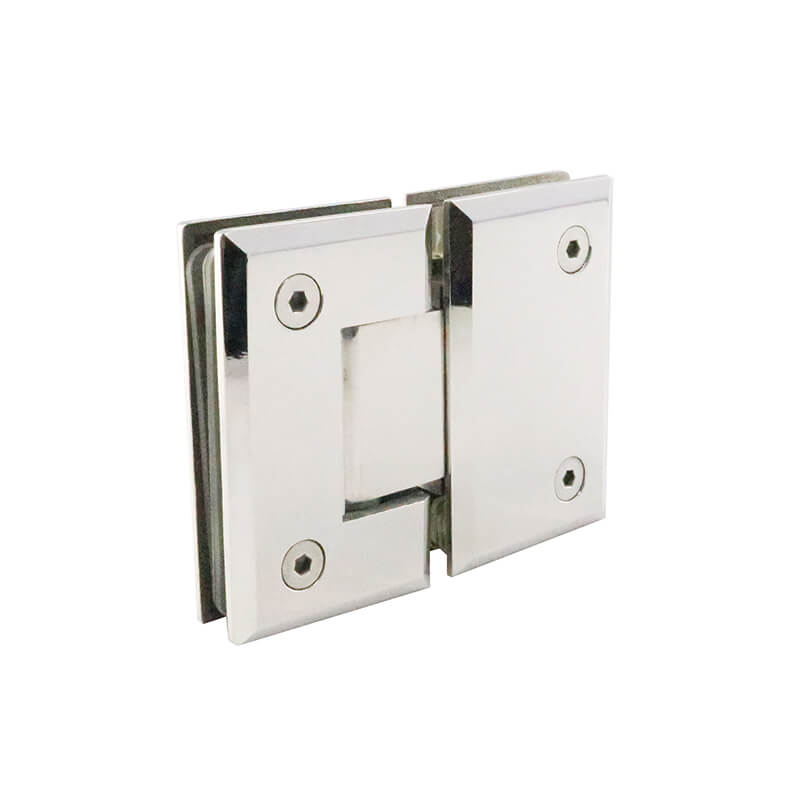
Shower Door Hinges: How to Choose the Right Hardware for Frameless Glass Doors
Shower door hinges carry more weight than most homeowners realize, both literally and in terms of long-term reliability. A frameless glass door can weigh well over 40 pounds, and every ounce of that hangs on a small piece of hardware that gets soaked in water and cleaning chemicals daily. When shower door hinges fail or corrode prematurely, the result isn’t just an annoying squeak. It’s a sagging door, a misaligned seal, or worse, a glass panel that no longer closes flush against the frame.
Choosing the right hinge means understanding what the shower environment actually does to metal over time, and what design details separate a hinge that lasts a decade from one that seizes up in two years.
Why Bathroom Humidity Is Harder on Hardware Than It Looks
Most people assume a shower is just "wet," but the chemistry inside that enclosure is more aggressive than a simple splash of water. Steam condenses, evaporates, and condenses again, cycling minerals and cleaning residue across the metal surface hundreds of times a month.
Soap scum removers and acidic descalers, the kind used to fight hard water spots, are particularly rough on lower-grade metals. Over time, this exposure can pit chrome plating or cause discoloration on hardware that wasn’t built for the job. That’s why acid resistance matters as much as load capacity when evaluating shower door hinges.
Temperature swings add another layer of stress. A hinge might sit at room temperature overnight, then get exposed to hot shower steam within seconds of the water turning on. Repeated expansion and contraction, thousands of times over a hinge’s life, can loosen poorly fitted joints or accelerate wear on cheaper alloys.
Material Selection: Why Stainless Steel Grade Actually Matters
Not all "stainless steel" hardware is built the same. The grade of steel used in a hinge determines how well it holds up against the humidity and chemical exposure described above.
| Steel Grade | Common Use Case | Corrosion Resistance | Typical Cost Tier |
|---|---|---|---|
| 201 | Budget residential fittings | Moderate | Lower |
| 304 | Standard bathroom hardware | Good | Mid-range |
| 316 | High-humidity or coastal environments | Excellent | Higher |
Grade 304 is generally considered the workhorse for indoor bathroom hardware, offering a solid balance of corrosion resistance and cost. Grade 316 includes added molybdenum, which improves resistance in more aggressive or salt-exposed environments, making it a common upgrade choice for humid climates or homes near the coast.
Sateer’s frameless glass shower door hinges are offered across 201, 304, and 316 stainless steel, which lets installers match the hardware grade to the specific bathroom conditions rather than defaulting to a one-size-fits-all spec. For a typical inland residential bathroom, 304 covers most needs. For beachfront properties or commercial spaces with heavier steam loads, stepping up to 316 is worth the difference in price.
Load Capacity and Plate Thickness: The Part Nobody Sees
Here’s something that trips up a lot of first-time buyers: a hinge can look identical to another one in a photo, yet perform completely differently under load. The variable that matters most, and the one you can’t judge from a glossy product image, is plate thickness.
A thin, stamped steel plate might hold a lightweight door for a while, but it will flex under the constant swinging motion of daily use. Flexing metal fatigues faster, and fatigued metal eventually cracks or loosens at the mounting points.
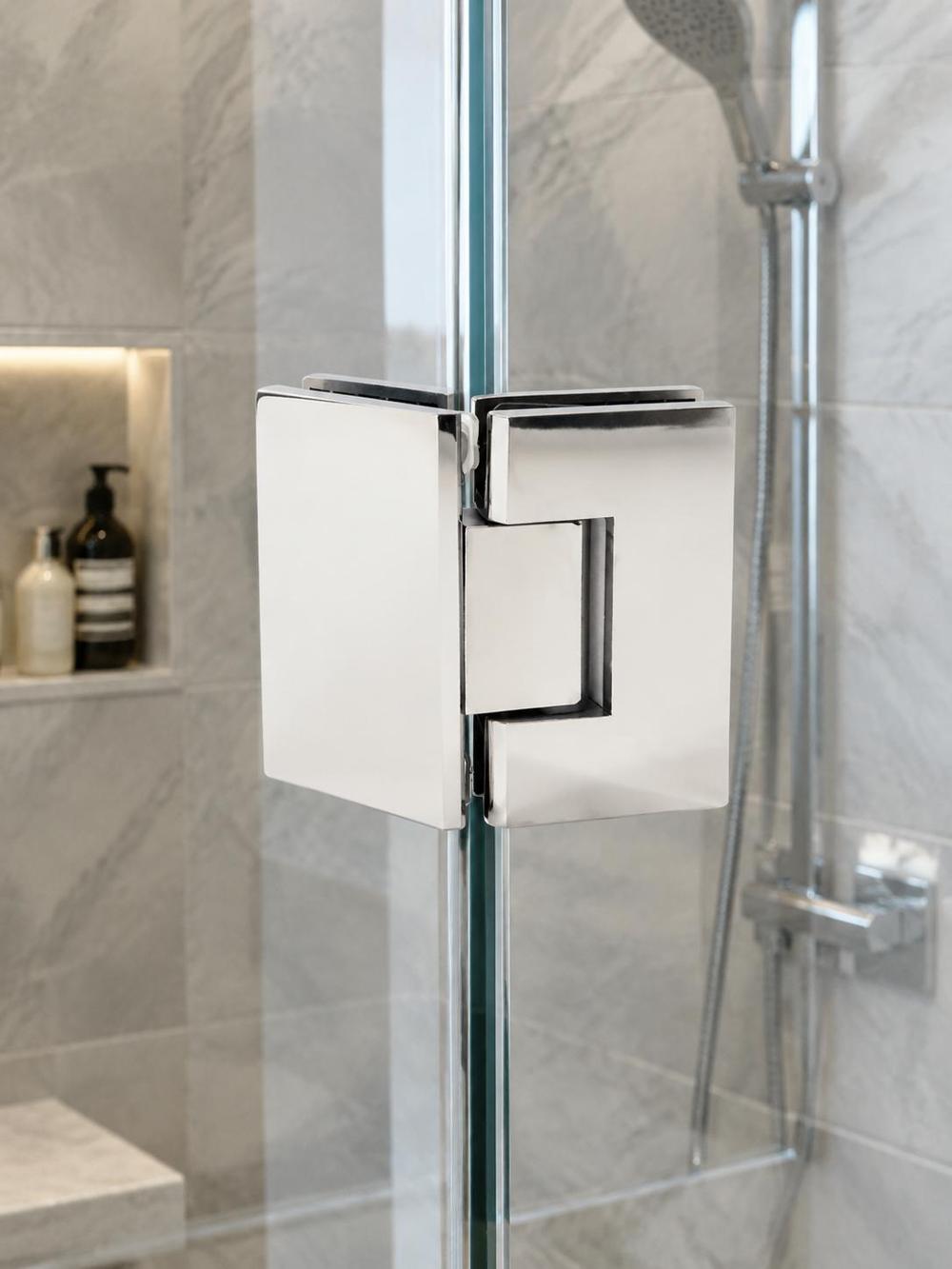
Thicker, solid steel plates distribute the door’s weight more evenly across the mounting screws. According to Sateer’s product specifications, its frameless hinges use a solid thickened steel plate specifically to improve bearing capacity and resist high pressure, which matters most on larger glass panels where the swinging arc puts repeated stress on the pivot joint.
The 180-Degree Swing: A Small Detail With Big Consequences
Door swing angle sounds like a minor spec until you’re the one squeezing past a door that only opens 90 degrees in a tight bathroom layout. A hinge engineered for a full 180-degree range gives homeowners flexibility in how the door sits when open, which matters in small bathrooms where every inch of clearance counts.
This kind of precision comes down to how tightly the pivot joint is machined. A loose or imprecise joint will bind partway through the swing, forcing the door to stop short or requiring extra force to open fully. Sateer’s hinge design is built around a 180-degree precise angle, intended to let the door move smoothly through its full range without catching or sticking.
Finish and Appearance: Function First, Aesthetics Second
Bathroom hardware finish is often treated as a purely cosmetic decision, but the finishing process actually affects how the metal behaves long-term too. A well-executed wire drawing finish, for example, creates a fine, brushed texture that resists showing water spots and fingerprints better than a mirror-polished surface.
Common finish options for glass door hinges include:
- PSS (Polished Stainless Steel) — bright, reflective, best for modern minimalist bathrooms
- SSS (Satin Stainless Steel) — brushed texture, hides smudges and water marks
- Black — matches matte black fixtures, increasingly common in contemporary design
- Golden or Ti (Titanium-coated) — warmer tones for traditional or luxury settings
Sateer offers its hinges in these finish options, giving designers flexibility to match existing fixture hardware, such as faucets or towel bars, rather than forcing a mismatched look.
Installation Considerations: Screws, Door Thickness, and Fit
Even the best hinge underperforms if it’s paired with the wrong glass thickness or fastened with subpar screws. Before ordering hardware, confirm these three details:
- Measure glass thickness precisely. Most frameless shower hinges, including Sateer’s line, are designed for glass in the 8-12mm range. A hinge rated for 10mm glass won’t clamp securely on 12mm panels.
- Check screw type and material. Hexagon socket head screws, which Sateer uses for its hinge line, allow for a firmer, more reliable riveting compared to standard slotted screws, reducing the chance of loosening over time.
- Verify wall or panel mounting compatibility. Some hinges are designed for glass-to-glass installations, others for glass-to-wall. Mixing up the two during ordering is one of the most common and avoidable installation mistakes.
Getting these three details right before installation saves a return trip to the hardware supplier and avoids a door that never quite sits flush.
Frequently Asked Questions
Can shower door hinges be adjusted after installation?
Most quality hinges allow minor adjustment through the mounting screws, but the core pivot angle is fixed by design. If a door is sagging or misaligned, check screw tightness first before assuming the hinge itself has failed.
Does a higher steel grade always mean a better hinge?
Not necessarily for every situation. Grade 316 offers superior corrosion resistance, but for a standard residential bathroom with normal ventilation, grade 304 typically provides sufficient durability at a lower cost.
How many hinges does a typical frameless shower door need?
This depends on door size and weight, but most residential installations use two to three hinges per door. Larger or heavier glass panels may require additional support points to distribute weight properly.
Why do some hinges discolor faster than others?
Discoloration often comes down to steel grade and finish quality. Lower-grade steel or poorly sealed finishes are more vulnerable to the acidic cleaners commonly used on glass and tile.
Matching Hinge Selection to the Actual Bathroom
The right choice ultimately depends on the specific bathroom’s conditions, not just the lowest price on a spec sheet. A humid, poorly ventilated bathroom with heavy daily use calls for a different spec than a guest bathroom used a few times a week.
Decision factors worth weighing before purchase:
- Ventilation quality — poorly ventilated bathrooms benefit from higher-grade steel like 316
- Glass panel weight and size — larger panels need thicker plates and possibly more mounting points
- Design consistency — finish should align with other bathroom fixtures for a cohesive look
- Local water hardness — harder water often means more frequent acidic cleaning, which favors more corrosion-resistant grades
Sateer, a manufacturer specializing in door control hardware for over 30 years, produces its frameless glass shower door hinges with these variables in mind, offering multiple steel grades and finishes so installers aren’t forced into a single spec regardless of bathroom conditions.
Shower door hinges rarely get attention until something goes wrong, a slow sag, a stubborn swing, or a faint rust bloom near the screws. Paying attention to steel grade, plate thickness, and swing precision before installation is far easier than troubleshooting a failing hinge years down the line. Whether the project is a single bathroom renovation or a batch of units for a multi-unit property, matching frameless glass shower door hinges to the actual environment they’ll live in is what separates hardware that lasts from hardware that becomes next year’s repair call.
-

Shower Door Hinges: How to Choose the Right Hardware for Frameless Glass Doors
08-10-2026 -
Glass Door Locks: What Frameless Glass Actually Needs to Stay Secure
08-10-2026 -
Glass Door Handles: Choosing Hardware That Balances Grip, Safety, and Style
08-10-2026 -

How to Find Reliable Frameless Shower Door Pivot Hinge Suppliers?
16-03-2026 -

Glass Panel Hinge Maintenance: What Should You Do to Make It Last Longer?
06-03-2026


-
Why Do Shower Glass Door Hinges Fail and How to Prevent It?
18-03-2026 -
Do Framed Shower Door Hinges Rust Over Time and How Can You Prevent It?
17-03-2026 -
What Are the Best Shower Door Hinges for Glass-to-Glass Installations?
14-03-2026 -
Why Do Some Frameless Glass Shower Door Hinges Fail and How to Prevent It?
13-03-2026 -
How Do Frameless Shower Screen Hinges Affect Durability and Safety?
12-03-2026