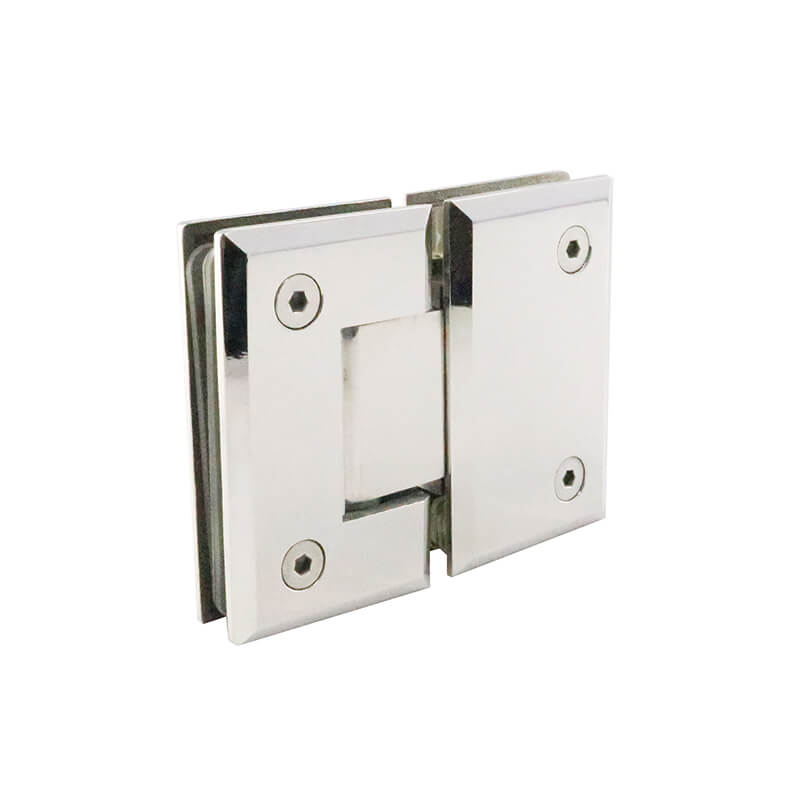
Glass Door Locks: What Frameless Glass Actually Needs to Stay Secure
Glass door locks solve a problem that swinging wood doors never had. A frameless glass panel has no deep timber edge to sink a mortise lock into, so the hardware has to do all the structural work from a thin strip of tempered glass, usually between 8mm and 12mm thick. That’s the starting point for anyone shopping for this category, and it explains why the wrong lock fails fast while the right one lasts for years.
Most buyers land here because a bathroom door feels flimsy, a shower enclosure won’t latch properly, or a commercial glass entry needs a security upgrade. The good news is that glass door locks have matured into a fairly standardized hardware category, even though the finishes and shapes vary widely.
Why Glass Doors Need Specialized Locking Hardware
A wood or metal door distributes clamping force across a frame. Glass can’t do that. Instead, a glass door lock clamps directly onto the panel edge, which means the lock body itself has to absorb stress that would normally be spread out by a door frame.
This is why cheap stamped hardware tends to loosen, rattle, or crack the glass edge over time. The clamping mechanism needs enough structural rigidity to hold tension without transferring sharp pressure points into the glass. A precision-cast inner core, paired with a thicker outer shell, handles that stress more evenly than thin stamped metal ever could.
There’s also the matter of moisture. Bathrooms and shower rooms are the two most common installation sites for glass door locks, and both environments punish hardware that isn’t built for corrosion resistance. Steam, standing water, and cleaning chemicals will find every weak seam in a lock within a year or two if the materials aren’t right.
Material Choice Is the First Real Decision
Once you accept that glass hardware lives a harder life than typical door hardware, material selection becomes the first meaningful decision rather than an afterthought.
Stainless steel is the standard here for good reason. Grades like 201 and 304 stainless steel are common in glass door lock construction, with 304 generally offering better corrosion resistance thanks to its higher nickel and chromium content. That difference matters more in humid, high-contact environments than most buyers initially expect.
- 201 stainless steel: More budget-friendly, reasonably durable, suited to lower-humidity interior applications.
- 304 stainless steel: Higher corrosion resistance, better suited to bathrooms and shower rooms where moisture exposure is constant.
- Cold-rolled steel covers: When thickened and used as a protective outer shell, they add rigidity without adding excessive bulk.
- Cast iron inner cores: Provide a dense structural base that resists deformation under repeated clamping stress.
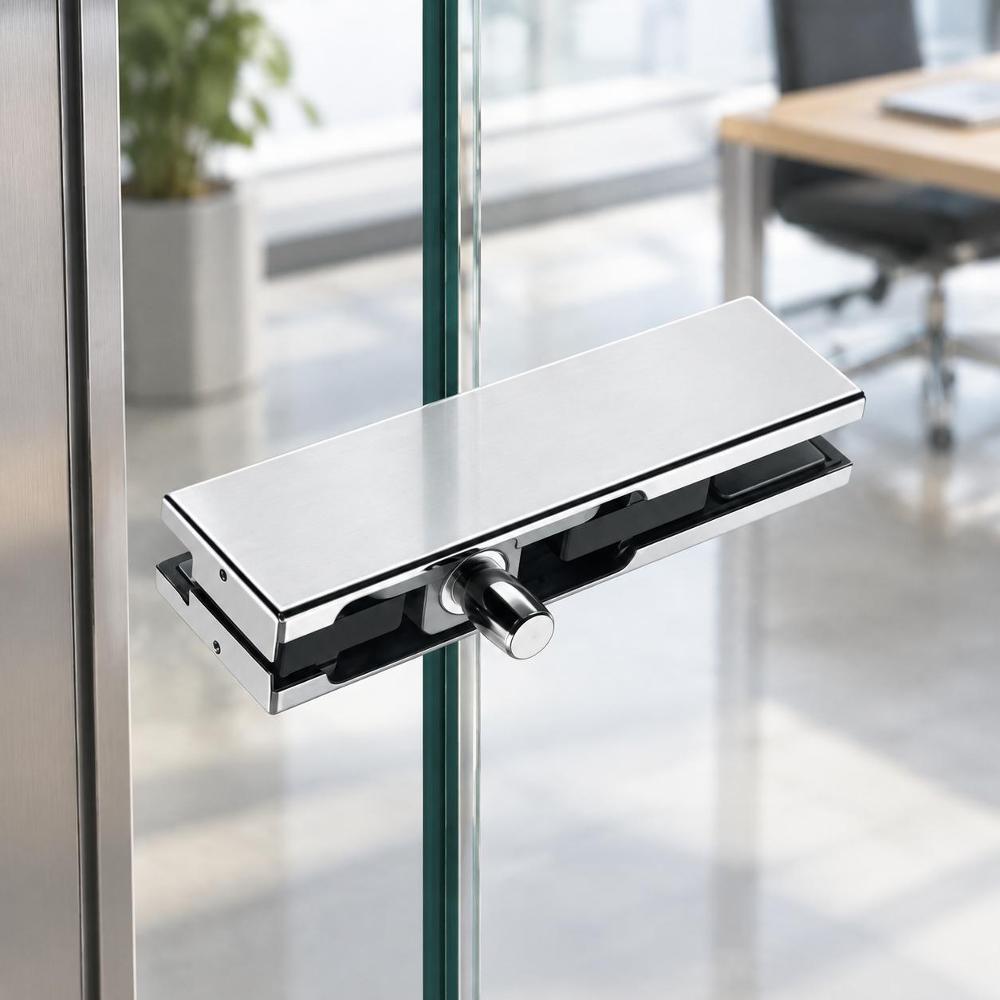
The SATEER Stainless Steel Glass Door Lock, model STE-F003, follows this layered approach. According to the product specification, it pairs a thickened cold-rolled steel protective cover with a precision-cast iron inner core, a construction method the manufacturer positions as aimed at long-term durability rather than short-term cost savings.
Security Details People Overlook
Most people evaluating glass door locks focus on the visible clamp and bolt, but the fasteners matter almost as much as the lock body itself.
Standard screws on exposed hardware are an easy target. Anyone with a basic screwdriver can loosen a patch fitting held together with conventional screws, which defeats the purpose of the lock entirely. That’s why anti-theft hexagon socket screws show up on more serious hardware. They require a matching hex key rather than a common tool, which raises the bar for casual tampering without changing how the door feels to use day to day.
Structural integrity also depends on how the lock’s internal components interact with the glass edge. A lock that clamps too aggressively can stress the glass; one that clamps too loosely will wobble and eventually fail. The internal rubber padding used in many frameless glass door locks exists specifically to cushion that contact point, protecting the glass surface during both installation and years of daily operation.
Comparing Lock Types for Frameless Glass
Not every glass door lock is designed for the same door configuration. Choosing the right type depends heavily on how the door swings, how thick the glass is, and where it’s installed.
| Lock Type | Best For | Typical Glass Thickness | Key Consideration |
|---|---|---|---|
| Patch fitting lock | Frameless entry doors, commercial glass fronts | 10-12mm | Requires precise edge drilling |
| Bathroom/shower door lock | Residential shower enclosures, hotel bathrooms | 8-10mm | Prioritizes moisture resistance |
| Sliding glass door lock | Sliding panels, partitions | 8-12mm | Needs smooth, low-friction latch action |
| Hinge-integrated lock | Swinging frameless doors | 10-12mm | Combines hinge and lock function |
The SATEER STE-F003 is built around an 8-12mm door thickness range, which covers the majority of residential shower doors and many commercial frameless glass installations. That range isn’t arbitrary. It reflects two of the most common tempered glass thicknesses used in door applications, so a lock designed outside that window often means custom drilling or an awkward fit.
Silent Operation Is a Real Usability Factor, Not a Luxury
Anyone who has stayed in a hotel with a squeaky, clunky bathroom door lock knows how much noise affects the perceived quality of a space. It’s a small detail, but it’s the one guests and homeowners notice first, often before they notice the finish or the design.
A smooth, quiet switch mechanism depends on how tightly the internal components are machined and how well the moving parts are seated against each other. Loose tolerances create friction, and friction creates noise. This is one area where the difference between budget stamped hardware and precision-cast components becomes obvious the moment you touch the lock.
For hotel bathrooms specifically, where housekeeping staff and guests operate the same lock dozens of times a day, that quiet operation isn’t a minor feature. It’s a durability signal. Hardware that stays quiet after months of heavy use is hardware that hasn’t loosened internally.
Finish Options and Where They Actually Matter
Finish selection often gets treated as a purely aesthetic choice, but it has practical implications for maintenance and longevity too.
- Polished stainless steel (PSS) – Reflective, modern look, shows fingerprints and water spots more readily in high-touch bathroom settings.
- Satin/brushed stainless steel (SSS) – Softer sheen, hides minor scratches and water marks better than polished finishes.
- Black – Increasingly common in modern interior design, pairs well with matte black fixtures.
- Gold or titanium (Ti) plating – Adds warmth to a space, often used in higher-end hospitality projects.
Available colors for the SATEER STE-F003 include PSS, SSS, black, golden, titanium, and other custom options, which gives designers room to match existing bathroom hardware rather than forcing a mismatched accent piece into an otherwise cohesive space.
Installation Considerations Before You Buy
Buying the right glass door lock is only half the job. Installation compatibility determines whether that lock performs as intended.
- Confirm exact glass thickness before ordering; an 8mm door and a 12mm door often require different clamp depths.
- Check whether the door is frameless or semi-framed, since mounting methods differ.
- Verify that the lock’s mounting screws and drilling pattern match existing pre-drilled holes if retrofitting an older door.
- Consider environmental exposure. Shower rooms and hotel bathrooms justify higher corrosion resistance than a dry interior partition.
Frameless glass door installations, in particular, leave very little margin for error, since there’s no frame to compensate for minor gaps or misalignment. Getting the thickness and drilling specification right the first time saves a costly re-drill or a replacement panel later.
Frequently Asked Questions
Do glass door locks work on tempered glass without drilling extra holes?
Most frameless glass door locks are designed for standard pre-drilled hole patterns based on door thickness, so matching the lock to your existing glass specification is usually more important than drilling new holes.
Is 304 stainless steel necessary for every glass door lock, or is 201 good enough?
201 stainless steel performs adequately in lower-moisture interior settings, but 304 is generally the better choice for bathrooms, shower rooms, and any space with regular water exposure.
Why do some glass door locks feel loose after a year of use?
Loose feeling locks are usually a sign of thin stamped components or inadequate internal padding, which allows small amounts of movement to accumulate over repeated use.
Can the same lock be used for both swinging and sliding glass doors?
Not typically. Swinging doors need a clamp-and-latch mechanism, while sliding doors need a smoother, low-friction latch that doesn’t obstruct the sliding track.
Glass door locks are one of those hardware categories where the difference between a good product and a mediocre one only becomes obvious after months of daily use, not on the showroom floor. Anti-theft fasteners, corrosion-resistant stainless steel, and a well-machined internal core are the details that separate hardware that ages gracefully from hardware that starts failing within a year. For us at SATEER, that durability-first approach shapes how products like the STE-F003 are built, from the cold-rolled steel cover down to the cast iron core. Whether the application is a hotel bathroom, a residential shower enclosure, or a commercial frameless glass entry, matching the right glass door lock to the door’s thickness, environment, and daily usage pattern is what determines whether that hardware still feels solid years down the line.
-

Glass Door Locks: What Frameless Glass Actually Needs to Stay Secure
08-10-2026 -
Glass Door Handles: Choosing Hardware That Balances Grip, Safety, and Style
08-10-2026 -

How to Find Reliable Frameless Shower Door Pivot Hinge Suppliers?
16-03-2026 -

Glass Panel Hinge Maintenance: What Should You Do to Make It Last Longer?
06-03-2026 -
What Are the Different Types of Frameless Glass Hinges and Their Uses?
04-03-2026


-
Why Do Shower Glass Door Hinges Fail and How to Prevent It?
18-03-2026 -
Do Framed Shower Door Hinges Rust Over Time and How Can You Prevent It?
17-03-2026 -
What Are the Best Shower Door Hinges for Glass-to-Glass Installations?
14-03-2026 -
Why Do Some Frameless Glass Shower Door Hinges Fail and How to Prevent It?
13-03-2026 -
How Do Frameless Shower Screen Hinges Affect Durability and Safety?
12-03-2026