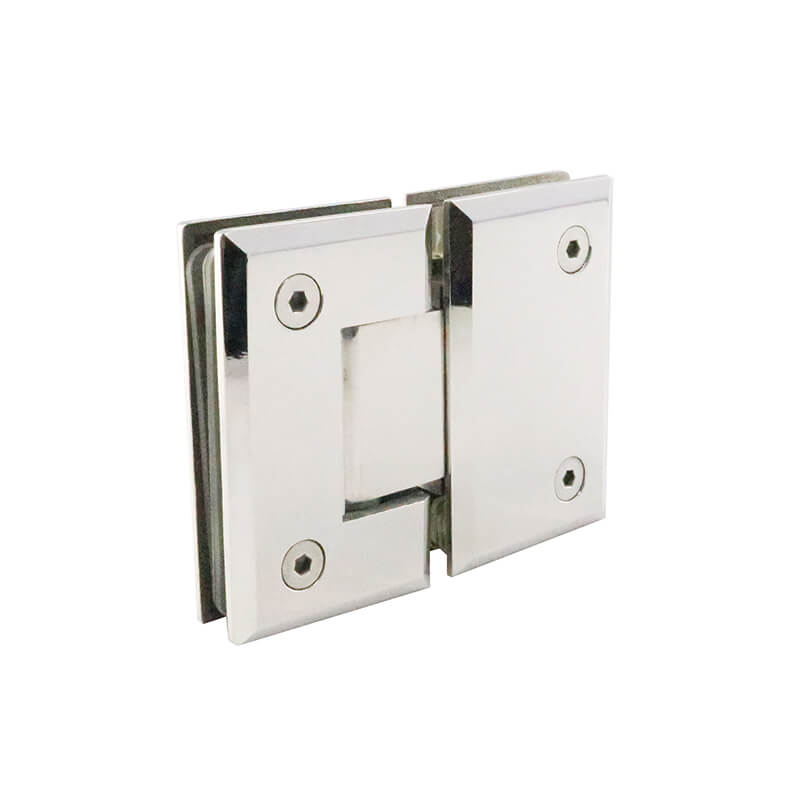
What technical parameters need to be provided for custom shower door clamps?
When it comes to customizing shower door clamps, providing accurate and detailed technical parameters is the cornerstone of ensuring the final product fits perfectly, functions reliably, and meets safety standards. Shower door clamps are not one-size-fits-all components—they bear the weight of the door, resist water intrusion, and maintain structural stability in the humid bathroom environment. Whether you are a homeowner renovating a bathroom or a procurement manager for a construction project, clarifying the following technical parameters will help manufacturers deliver custom clamps that align with your specific needs.

1. Basic Door-Related Parameters: The Foundation of Customization
The core function of shower door clamps is to secure the shower door, so the first set of parameters you need to confirm revolves around the door itself. These parameters directly determine the size, load-bearing capacity, and installation method of the clamps.
1.1 Door Thickness
Shower door thickness varies widely, typically ranging from 6mm to 12mm for frameless or semi-frameless doors. This is the most critical parameter for clamp customization, as clamps are designed with a specific “grip width” to match the door thickness. A clamp that is too narrow will fail to hold the door tightly, leading to wobbling or even falling; one that is too wide cannot be installed properly. Be sure to measure the door thickness accurately—use a caliper for precision, and note if the door has a beveled edge (which may require special clamp design).
1.2 Door Material
Common shower door materials include tempered glass, acrylic, and composite materials, with tempered glass being the most popular due to its high strength and safety. The door material affects the clamp’s internal padding, clamping force, and even surface treatment. For example, tempered glass requires clamps with non-slip, scratch-resistant gaskets (often made of EPDM rubber) to avoid damaging the glass surface while ensuring a firm grip. Acrylic doors, being lighter but more prone to scratches, may need clamps with softer padding and lower clamping pressure.
1.3 Door Type and Opening Direction
Shower doors come in various types, such as swing doors (inward or outward opening), sliding doors, and folding doors. Each type requires clamps with different structural designs. For swing doors, the clamp must withstand the torque generated when the door is opened and closed, so parameters like the hinge position and door weight (typically 8-20kg) are essential. For sliding doors, the clamp needs to coordinate with the track system, so the distance between the clamp and the track, as well as the door’s sliding direction, must be specified. Additionally, the opening direction (left-handed or right-handed) for swing doors will determine the clamp’s hinge orientation.
2. Clamp-Specific Structural Parameters: Ensuring Functionality
Beyond door-related parameters, you also need to define the structural characteristics of the custom clamps themselves. These parameters affect the clamp’s installation, appearance, and long-term performance.
2.1 Clamp Size and Installation Dimensions
Specify the desired length, width, and height of the clamp, as well as the installation hole positions and sizes. The installation holes (usually for screws) must align with the pre-drilled holes on the door or wall, so provide the center-to-center distance between holes and the diameter of the holes (common sizes are 4mm, 5mm, or 6mm). If the clamp needs to be mounted on a wall or shower enclosure frame, also provide the thickness and material of the mounting surface (e.g., aluminum alloy frame, ceramic tile wall) to ensure the fasteners are compatible.
2.2 Load-Bearing Requirement
The load-bearing capacity of the clamp is directly related to shower safety. Calculate the total load the clamp needs to bear, which includes the door’s weight plus any additional stress (e.g., accidental impacts). For a single clamp used on a swing door, the load-bearing capacity is usually required to be 10-15kg; for clamps used in pairs (top and bottom), the combined load-bearing capacity should exceed the door’s weight by 50% to ensure a safety margin. Clearly state this requirement, and manufacturers will select appropriate materials and strengthen the clamp’s structure (e.g., thickening the metal body) accordingly.
2.3 Sealing and Waterproof Requirements
Bathrooms are high-humidity environments, so shower door clamps must have good sealing and waterproof performance. Specify whether you need additional waterproof gaskets, the required sealing range (e.g., between the clamp and the door, or between the clamp and the wall), and the expected water resistance level (e.g., preventing water from seeping into the clamp’s internal components to avoid rust). For areas with high water pressure (e.g., showers with overhead rainheads), you may need clamps with double-layer gaskets or drainage channels.
3. Material and Surface Treatment Parameters: Durability and Aesthetics
The material and surface treatment of the clamp determine its durability, corrosion resistance, and appearance. When customizing, clearly define these parameters to match the bathroom’s style and ensure long-term use.
3.1 Clamp Body Material
Common clamp materials include 304 stainless steel, brass, aluminum alloy, and zinc alloy. 304 stainless steel is the top choice for its excellent corrosion resistance and strength, making it suitable for humid environments. Brass is more malleable and can be polished to a high gloss, but it is more expensive. Aluminum alloy is lightweight and affordable but has lower load-bearing capacity, suitable for light-weight doors. Zinc alloy is cost-effective but prone to rust if the surface treatment is poor. Specify the material grade (e.g., 304 vs. 201 stainless steel) to avoid substandard substitutions.
3.2 Surface Treatment
Surface treatment not only enhances the clamp’s corrosion resistance but also improves its aesthetics. Common options include brushed nickel, polished chrome, matte black, gold, and oil-rubbed bronze. Brushed nickel is popular for its anti-fingerprint property, while polished chrome offers a bright, modern look. Matte black is a trend in contemporary bathroom design, matching minimalist styles. Specify the desired finish, and note if you have special requirements (e.g., scratch resistance, environmental protection—avoiding toxic coatings).
4. Additional Customization Parameters: Meeting Special Needs
In addition to the above core parameters, you may have special requirements that need to be clearly communicated to the manufacturer.
4.1 Logo and Branding
If you are a retailer or brand owner, you may want to add your logo to the clamp. Specify the logo’s position (e.g., on the clamp’s front panel), size, and processing method (e.g., laser engraving, silk-screen printing, embossing). Provide high-resolution logo files (e.g., AI or PDF format) to ensure clarity.
4.2 Special Environmental Adaptations
If the shower is installed in a special environment—such as a coastal area (high salt content in the air) or a public bathroom (high usage frequency)—specify these conditions. Manufacturers can then adjust the material (e.g., using 316 stainless steel for coastal areas) or strengthen the clamp’s structure to improve durability.
4.3 Compliance with Standards
Different regions have strict safety standards for shower components, such as the EU’s CE certification, the US’s ANSI standard, or China’s GB standard. Specify the target market’s standards, and manufacturers will ensure the custom clamps meet the required mechanical properties, material safety, and installation specifications.
Final Tips for Providing Parameters
To avoid misunderstandings, it is recommended to provide parameters in a structured format (e.g., a table) and attach drawings or photos if possible (e.g., door dimensions, installation site photos). Communicate with the manufacturer in advance to confirm whether certain parameters are standard or require special customization, and ask for a sample before mass production to test the fit and functionality.
In summary, accurate technical parameters are the bridge between your customization needs and the manufacturer’s production. By clarifying door-related details, clamp structure, material requirements, and special needs, you can ensure the custom shower door clamps are safe, durable, and perfectly integrated into your shower space.
-

How to Find Reliable Frameless Shower Door Pivot Hinge Suppliers?
16-03-2026 -

Glass Panel Hinge Maintenance: What Should You Do to Make It Last Longer?
06-03-2026 -
What Are the Different Types of Frameless Glass Hinges and Their Uses?
04-03-2026 -
Why Do Bathroom Glass Door Hinges Keep Rusting, and How Can You Prevent It?
28-02-2026 -
What to Look for When Buying Shower Screen Door Pivot Hinges?
27-02-2026


-
Why Do Shower Glass Door Hinges Fail and How to Prevent It?
18-03-2026 -
Do Framed Shower Door Hinges Rust Over Time and How Can You Prevent It?
17-03-2026 -
What Are the Best Shower Door Hinges for Glass-to-Glass Installations?
14-03-2026 -
Why Do Some Frameless Glass Shower Door Hinges Fail and How to Prevent It?
13-03-2026 -
How Do Frameless Shower Screen Hinges Affect Durability and Safety?
12-03-2026