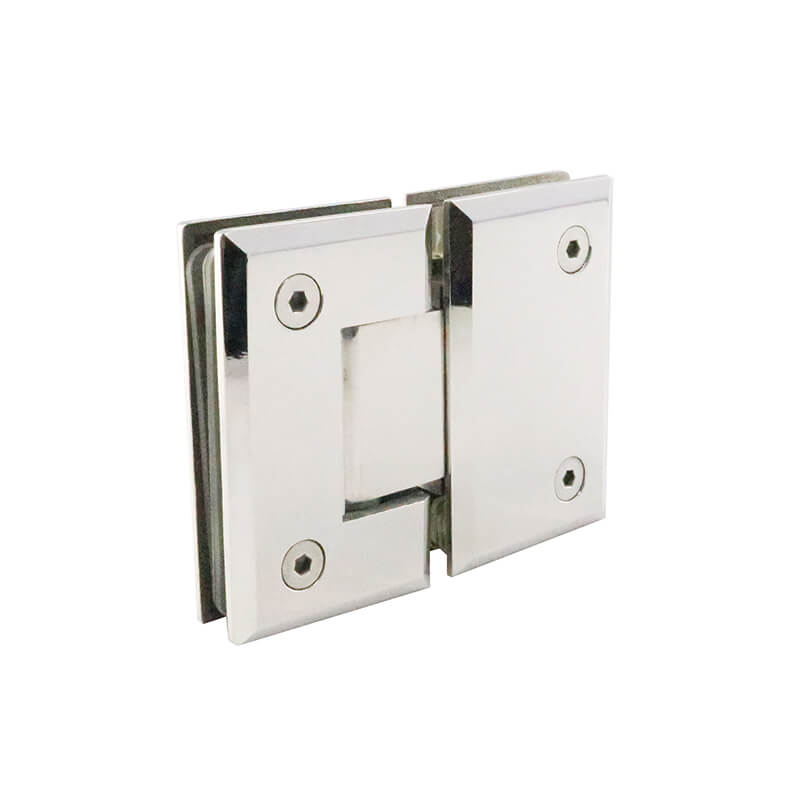
Frameless Glass Door Lock: Engineering Precision for Modern Access Control
Glass partitions have become architectural anchors in spaces where light flow matters. Offices remove visual barriers. Hotel lobbies project openness. Residential bathrooms shed the weight of traditional enclosures. Yet every transparent surface introduces a control problem: how do you secure something you can barely see?
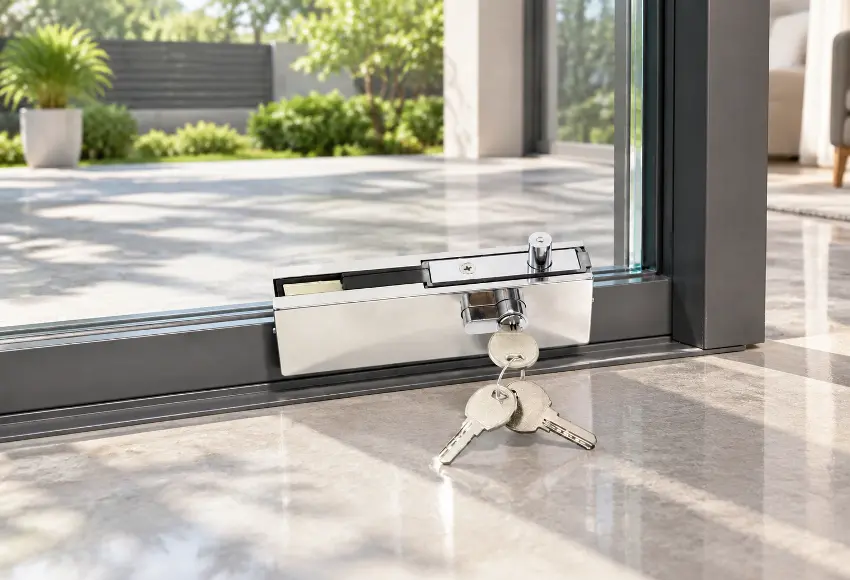
The frameless glass door lock solves this by anchoring hardware directly to the glass substrate. Unlike frame-dependent systems that rely on surrounding structures, these mechanisms clamp onto the material itself, distributing force across tempered panels without requiring mullions or vertical supports. The result is a door that appears suspended, held only by minimal metal contact points.
Why Frameless Systems Demand Different Hardware
Traditional door locks assume the presence of a frame. Mortise cylinders sit inside wooden stiles. Rim locks mount to metal jambs. Frameless glass eliminates both, leaving only the panel and the floor-to-ceiling hinge axis. This changes load distribution fundamentally.
Glass cannot accept threaded fasteners the way wood or metal can. Drill a hole, and you create a stress concentration point where cracks propagate under lateral force. The solution involves compression rather than penetration. Hardware must grip the glass surface area, spreading clamping force across enough square millimeters to prevent localized failure while maintaining enough bite to resist torque when someone turns the handle.
Material selection becomes critical. Stainless steel grades 201, 304, and 316 each offer distinct corrosion profiles. Grade 201 provides cost efficiency in dry indoor applications. Grade 304 handles moderate moisture exposure common in commercial restrooms. Grade 316 resists chloride ion attack in coastal installations or pool enclosures where salt air accelerates surface degradation. The STE-F040 model accommodates glass thickness from 8 to 12mm, addressing the range between standard interior panels and heavier security-rated installations.
Compression Mechanics and Force Transfer
A frameless glass door lock typically consists of two opposing plates that sandwich the glass between them. Hexagon socket anti-theft screws pull these plates together, creating uniform pressure across the contact surface. This compression must be calibrated: too little, and the hardware slips during use; too much, and you risk microfractures at the clamping edge.
Cast iron inner cores provide dimensional stability under sustained clamping loads. Unlike softer metals that creep over time, cast iron maintains bolt tension, preventing loosening that would otherwise occur through thermal cycling or repeated door operation. The thickened cold-rolled steel protective cover shields this core from impact while adding a corrosion-resistant barrier that extends service life in high-humidity environments.
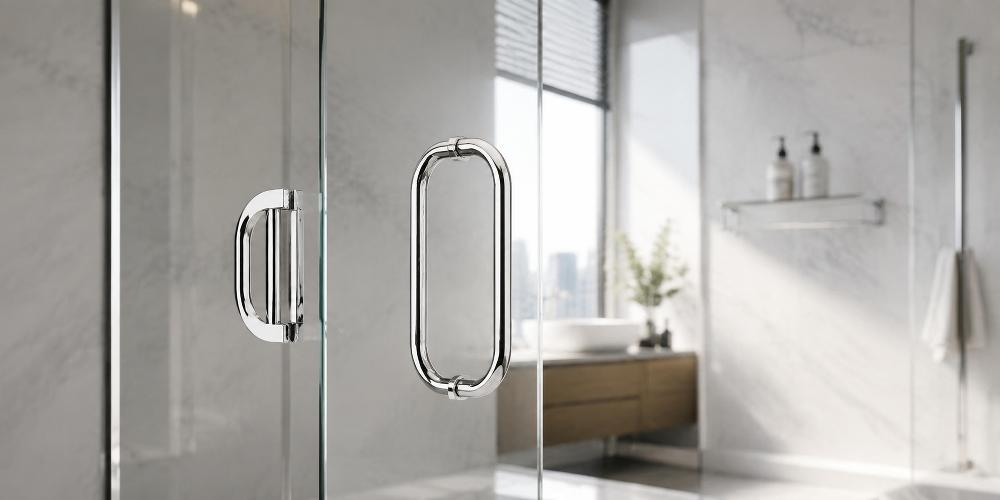
One-piece molding eliminates assembly joints where moisture could infiltrate. Welded or riveted constructions create galvanic cells when dissimilar metals meet in the presence of electrolytes—essentially, condensation becomes battery acid. Monolithic fabrication removes these corrosion initiation sites, particularly valuable in shower room installations where water contact is continuous.
Lock Cylinder Integration and Access Control
The locking mechanism itself must fit within the constrained geometry available. Glass panels rarely exceed 12mm thickness, leaving minimal depth for cylinder housing. Modern designs orient the keyway perpendicular to the glass plane, allowing the plug to rotate within a cylinder body that sits parallel to the door edge. This configuration keeps the lock profile low while providing adequate lever arm for bolt throw.
Anti-theft hexagon socket screws serve a dual purpose beyond simple fastening. Standard Phillips or hex heads can be removed with common tools. Hexagon sockets require specialized drivers, raising the threshold for casual tampering. This matters in semi-public spaces like shared office bathrooms or hotel back-of-house areas where access control is partial rather than absolute.
Silent switching refers to the absence of metal-on-metal clatter when the bolt extends or retracts. Nylon bushings isolate moving components, absorbing vibration that would otherwise propagate through the glass as audible ringing. In residential settings, this eliminates the sharp click that announces bathroom occupation. In commercial spaces, it reduces acoustic clutter that accumulates across dozens of door operations per hour.
Installation Considerations for Tempered Glass
Frameless glass doors almost universally use tempered material. Tempering introduces surface compression that must be preserved during hardware installation. Over-tightening fasteners can exceed local compressive capacity, flipping the stress state to tension and causing spontaneous fracture—the entire panel disintegrates into rounded cubes within seconds.
Installation torque specifications matter. A torque wrench calibrated to the hardware manufacturer’s recommended newton-meters ensures consistent clamping without exceeding glass limits. For hardware in this category, installation torque typically falls between 3 and 5 Nm, though exact values depend on gasket material and glass edge finishing.
Edge quality also affects lock performance. Ground edges provide greater surface area contact than polished edges, which prioritize aesthetics over mechanical engagement. Seamed edges—those with slight chamfers—reduce the risk of stress concentration at the corner where compression plates meet the glass face. Specifiers should coordinate edge finish with hardware selection rather than treating them as independent variables.
Material Durability Across Environmental Conditions
Stainless steel nomenclature can mislead. "Stainless" describes relative corrosion resistance, not immunity. In chlorinated water environments, even 304-grade steel develops pitting over extended exposure. Grade 316 adds molybdenum to the alloy, forming a passive film that self-heals when scratched. For frameless glass door locks in pool enclosures or marine-adjacent buildings, the upgrade from 304 to 316 often determines whether hardware survives five years or fifteen.
Color finishes interact with corrosion resistance. Polished stainless steel (PSS) and satin stainless steel (SSS) rely on the underlying alloy for protection—the finish is purely textural. Physical vapor deposition (PVD) coatings in black, gold, or titanium add a ceramic layer that blocks oxygen and moisture from reaching the base metal. PVD extends service life in harsh conditions but requires gentle cleaning; abrasive scrubbing removes the coating and exposes unprotected substrate.
Cold-rolled steel protective covers combine thickness with work hardening. Cold rolling compresses the grain structure, increasing yield strength compared to hot-rolled equivalents. This allows thinner gauge material to achieve the same impact resistance, reducing weight while maintaining dent protection during shipping and installation.
Application-Specific Selection Criteria
Hotel installations prioritize ease of re-keying. Properties change locks between guest stays in high-security implementations or after lost key incidents. Modular cylinder designs allow locksmiths to swap cores without removing the entire hardware assembly, minimizing door downtime. Look for systems where the cylinder housing separates from the compression plates via set screws accessible from the door edge.
Shower room applications demand drainage pathways. Water that pools against metal accelerates crevice corrosion. Hardware with chamfered edges or raised mounting points creates air gaps where water films break and run off rather than collecting in stagnant contact. Some designs incorporate weep holes that channel moisture away from the lock body, though these require periodic cleaning to prevent soap scum blockage.
Office partitions often integrate access control electronics. Electromagnetic locks require power routing and fail-safe or fail-secure logic. Frameless glass door locks with cable pass-throughs accommodate wiring without drilling additional holes. Magnetic bond strength must overcome both door weight and the lateral force of someone pushing against a locked door—typically 600 to 1200 pounds holding force depending on fire code requirements.
Comparing Patch Fittings and Direct-Mount Systems
Patch fittings represent an alternative approach where a metal plate attaches to the glass surface, and the lock mechanism mounts to that plate. This distributes load over a larger area and allows heavier-duty cylinders that wouldn’t fit within direct-mount geometry. The tradeoff comes in visual bulk—patch fittings create a visible metal rectangle that interrupts the glass plane.
Direct-mount frameless glass door locks minimize this visual footprint. The hardware contacts only the door edge, leaving faces unobstructed. This appeals in retail storefronts or residential applications where transparency defines the aesthetic intent. However, direct-mount systems constrain lock body dimensions, limiting cylinder size and bolt throw length.
Neither approach is universally superior. Selection depends on whether the priority is maximum transparency or maximum security. A bank vestibule might accept patch fitting visibility in exchange for higher-grade cylinders. A residential shower door prioritizes clean lines over bank-vault security.
| Feature | Patch Fitting | Direct-Mount |
|---|---|---|
| Visual footprint | Larger metal plate visible on glass face | Minimal, hardware at door edge only |
| Lock cylinder size | Accommodates larger, higher-security cylinders | Limited by glass thickness (8-12mm typical) |
| Load distribution | Spread across plate area, reduces glass stress | Concentrated at clamp points, requires careful torque control |
| Installation complexity | Requires precise plate alignment and adhesive curing | Mechanical clamping, no adhesive wait time |
| Aesthetic integration | More visible hardware presence | Cleaner, nearly invisible from certain angles |
Maintenance Protocols and Service Life
Frameless glass door locks accumulate wear differently than framed counterparts. The absence of a surrounding structure means every operational force transfers directly into the glass substrate. Over time, micro-movements at the clamp interface can polish the glass surface, reducing friction and allowing hardware to migrate. Annual inspections should verify that compression remains uniform and that no rotational drift has occurred.
Lubrication requires non-petroleum products. Silicone-based sprays avoid the residue buildup that attracts dust in high-traffic environments. Apply lubricant to the cylinder plug and bolt mechanism, avoiding contact with gaskets or compression pads where silicone can reduce friction needed for secure clamping.
Gasket replacement represents the most common maintenance task. Neoprene or EPDM gaskets compress over years of clamping force, thinning to the point where they no longer provide adequate cushioning. Replacing gaskets every three to five years depending on usage intensity prevents metal-to-glass contact that would otherwise scratch the surface or create fracture initiation points.
Architectural Integration and Design Language
Modern architecture treats walls as negotiable. Floor plans flex. Spaces multi-task. Frameless glass partitions enable this spatial fluidity while maintaining acoustic and climate separation. The hardware that secures these partitions must align with the same design language—minimal, precise, and functionally evident.
Hardware becomes an architectural detail rather than an afterthought. Specifiers select frameless glass door locks alongside hinges, rails, and trim, ensuring cohesive material and finish relationships throughout the project. This requires manufacturers to offer finish consistency across product lines—door hardware, cabinetry pulls, and plumbing fixtures should share not just color but also sheen and texture at the micro level.
Security Gradation and Risk Assessment
Not every glass door requires the same security threshold. A residential bathroom needs privacy locking—keeping the door closed is sufficient. A pharmaceutical storage room requires key control and audit trails. A bank teller partition demands bullet resistance and multi-point latching. Frameless glass door locks scale across this range through cylinder grade, bolt throw length, and reinforcement strategies.
Standard pin tumbler cylinders provide adequate security for low-risk applications. They prevent casual entry without keys but can be picked by someone with moderate skill and time. Medium-security applications benefit from sidebar mechanisms that add a second layer of pin alignment, exponentially increasing pick resistance. High-security cylinders incorporate rotating pins, magnetic elements, or biometric triggers that push security into the realm where physical glass destruction becomes easier than lock defeat.
Bolt throw length—the distance the locking bolt extends into the strike—determines resistance to door spreading attacks. Short throws of 10-15mm suffice when the strike sits close to the bolt. Longer throws of 20-25mm provide security margin in installations where tolerance stack-up or thermal expansion might misalign components. For frameless systems, strike placement often involves floor-mounted receivers or adjacent glass panels fitted with reinforced strike plates.
Emerging Trends in Access Hardware
Electronic access control continues integrating with mechanical systems. Bluetooth-enabled cylinders allow smartphone unlocking while maintaining physical key override. These require battery power, typically housed in a control box mounted adjacent to the door rather than within the slim profile available on frameless glass. Wire management becomes critical—exposed cables undermine the clean aesthetic that motivates frameless design in the first place.
Biometric readers face similar integration challenges. Fingerprint scanners need rigid mounting surfaces and power supplies. Embedding readers into glass requires specialized lamination techniques where sensors sit between glass plies. More commonly, biometric readers mount to adjacent walls or posts, communicating wirelessly with electromagnetic locks that secure the door itself.
For us, manufacturing glass door locks and handles has revealed that enduring hardware succeeds by solving present constraints rather than chasing technological fashion. Cast iron cores and cold-rolled steel covers address corrosion and impact—problems that persist regardless of electronic overlays. The physical lock remains the fallback when batteries die, networks fail, or software updates introduce bugs. Mechanical reliability anchors every system, digital or analog.
Specifying for Long-Term Performance
Procurement decisions often prioritize initial cost over lifecycle expense. A frameless glass door lock priced at half the cost of alternatives may require replacement within three years due to corrosion or mechanical wear. A higher-quality unit that survives fifteen years costs less annually while avoiding the labor expense and operational disruption of premature replacement.
Warranty terms reveal manufacturer confidence. One-year warranties are standard for consumer-grade hardware. Commercial-grade systems often carry five-year coverage, and premium products extend to ten years or more. Warranty claims should specify what triggers coverage—material defects, installation errors, or environmental exposure—and whether labor costs are included.
Testing certifications provide objective performance baselines. ANSI/BHMA standards define cycle counts for residential (Grade 3, 200,000 cycles), commercial (Grade 2, 400,000 cycles), and heavy-duty (Grade 1, 800,000 cycles) applications. These numbers represent laboratory testing under controlled conditions; real-world performance depends on installation quality and maintenance adherence. Still, certified hardware demonstrates that the manufacturer has invested in v
-

Frameless Glass Door Lock: Engineering Precision for Modern Access Control
11-10-2026 -
Frameless Shower Door Clips: Hardware That Holds the Line Between Function and Failure
10-10-2026 -
Stainless Steel Glass Door Lock: Engineering for Frameless Installations
09-10-2026 -
Glass Door Clips: What Actually Holds a Frameless Shower Together
08-10-2026 -
Sliding Door Rollers: How to Choose the Right Wheel System for Frameless Glass
08-10-2026
-

Why Do Shower Glass Door Hinges Fail and How to Prevent It?
18-03-2026 -

Do Framed Shower Door Hinges Rust Over Time and How Can You Prevent It?
17-03-2026 -
What Are the Best Shower Door Hinges for Glass-to-Glass Installations?
14-03-2026 -
Why Do Some Frameless Glass Shower Door Hinges Fail and How to Prevent It?
13-03-2026 -
How Do Frameless Shower Screen Hinges Affect Durability and Safety?
12-03-2026