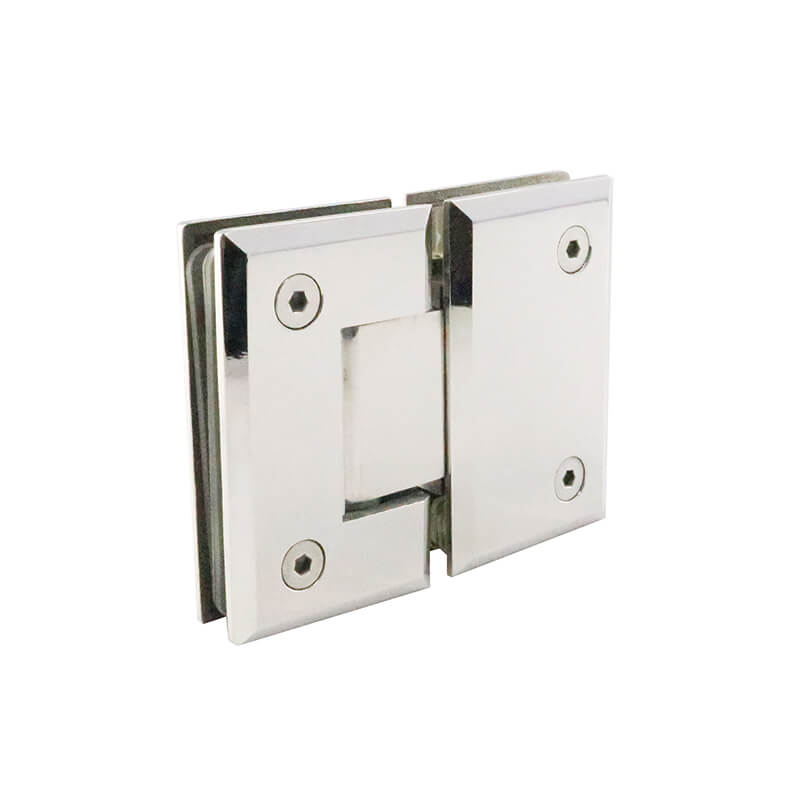
Stainless Steel Glass Door Lock: Engineering for Frameless Installations
The rise of frameless glass architecture has introduced a distinct challenge in door hardware. Traditional lock systems rely on frame support and material thickness that glass cannot provide. A stainless steel glass door lock addresses this by distributing force across the glass surface while maintaining security. For designers and contractors working with 8-12mm tempered glass, understanding how these locks integrate with transparent barriers becomes essential to both function and longevity.
Why Glass Doors Demand Specialized Locking Mechanisms
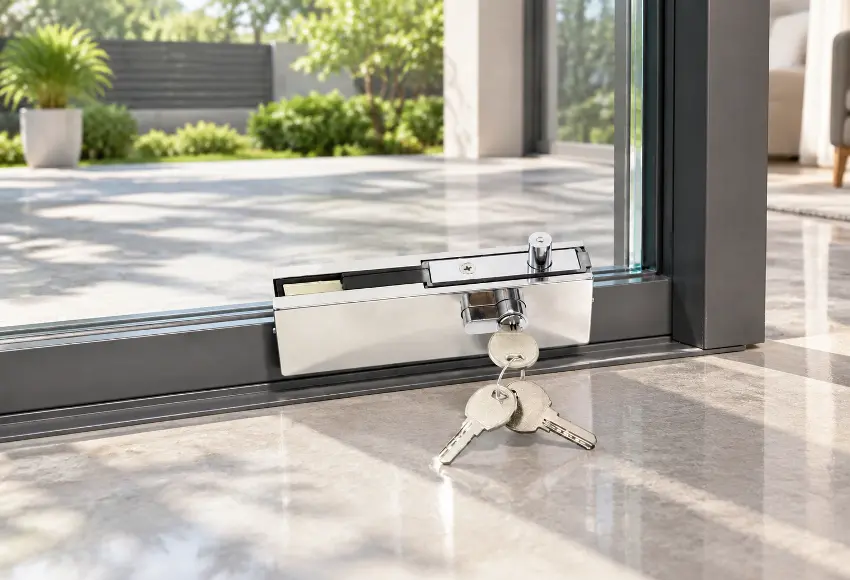
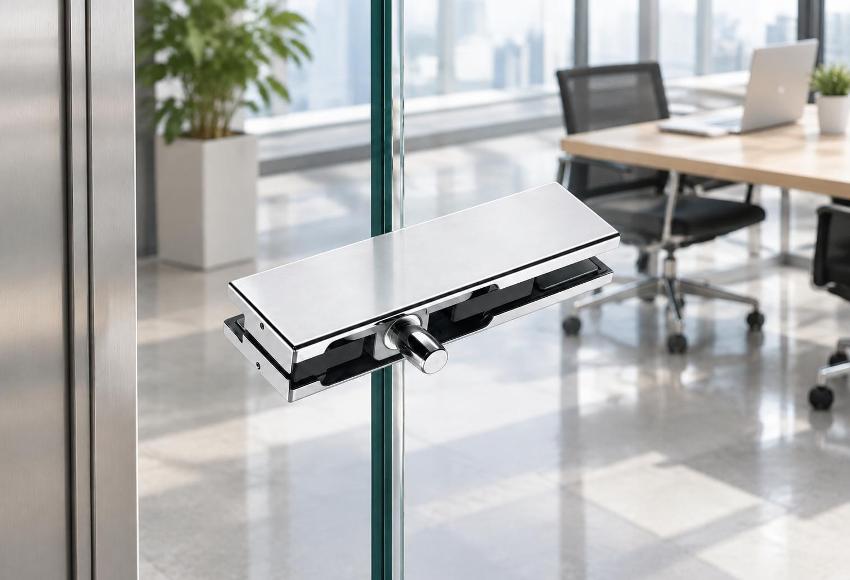
Glass lacks the internal structure of wood or metal. When you apply lateral force to a standard lock mounted on glass, stress concentrates at the bolt hole. This creates fracture points. Frameless installations amplify the problem because there’s no frame to absorb shock or distribute weight. A stainless steel glass door lock uses patch fittings—flat plates that spread pressure across a larger area. The contact surface, often backed with rubber gaskets, prevents point loading. This design principle mirrors how bridge bearings distribute weight, translating a mechanical concept into everyday hardware.
In environments like hotel bathrooms or residential shower rooms, moisture adds another layer. Steel that corrodes loses dimensional precision. The bolt may stick, or the protective cover may delaminate. Material choice here is not cosmetic. Stainless steel 201 offers baseline corrosion resistance suitable for dry interiors. Grade 304 increases chromium and nickel content, providing better performance in humid or chemically treated spaces. The selection should align with exposure, not simply with budget.
Internal Architecture: Cast Iron Core and Cold-Rolled Steel Shell
The lock’s performance hinges on two materials working in tandem. A precision-cast iron inner core provides the mass and rigidity needed for the locking bolt. Iron’s density resists wear when the bolt cycles thousands of times. Surrounding this core, a thickened cold-rolled steel protective cover serves as the structural shell. Cold-rolling compresses the steel’s grain structure, increasing hardness and fatigue resistance. This layered construction isolates mechanical stress from cosmetic surfaces.
Consider the bolt mechanism itself. Each throw must engage smoothly without binding, even when the door shifts slightly due to building movement or thermal expansion. The tolerance between bolt and housing is tight—typically under 0.5mm. If the inner core distorts over time, the bolt drags. Cast iron maintains dimensional stability better than sintered powder metals or zinc alloys, which are common in lower-cost alternatives. The trade-off is weight, but in a patch fitting secured with hex socket screws, that mass contributes to perceived solidity.
Anti-Theft Hex Socket Screws and Structural Integrity
Standard Phillips or flathead screws offer minimal security. A determined intruder can remove them with a common screwdriver. Hexagon socket screws require an Allen key, narrowing the tool set an attacker might carry. More importantly, hex sockets allow higher torque during installation. This matters when securing the lock to tempered glass. Undertightening leaves the fitting loose; overtightening can shatter the glass. Proper installation involves incremental torque increases, stopping just before the rubber gasket fully compresses.
The screw placement also affects integrity. Most designs position screws symmetrically around the lock body, creating balanced clamping force. Asymmetric placement would tilt the fitting, concentrating stress along one edge. For us, ensuring that the screw pattern aligns with the load path is part of the engineering review. It’s not a detail you see in marketing photos, but it determines whether the lock survives a door slam or an accidental impact.
Silent Operation and the Mechanics of User Experience
A silent lock is not a luxury feature. It’s a sign of precise engineering. Noise in a locking mechanism comes from metal-on-metal contact, loose tolerances, or inadequate lubrication. When you turn a key or thumb latch, the bolt should slide without scraping. This requires internal surfaces machined to fine tolerances and coated or treated to reduce friction. Some manufacturers use molybdenum disulfide or PTFE inserts. Others rely on polished steel and tight fits.
The subjective feel matters in commercial and residential projects. A rough, noisy lock communicates low quality, regardless of actual security performance. In hotel settings, where guests evaluate their experience through small details, the tactile feedback of a smooth bolt throw contributes to overall satisfaction. This is why silent operation appears in technical specifications—it’s measurable through decibel testing, though few manufacturers publish those numbers.
Material Finishes and Environmental Durability
Stainless steel can be finished in multiple ways, each affecting both appearance and performance. PSS (polished stainless steel) and SSS (satin stainless steel) are common. Polished finishes show fingerprints but reflect light, making the hardware feel lighter. Satin finishes hide smudges and integrate better with matte glass or stone surrounds. Black, golden, and titanium finishes are typically PVD (physical vapor deposition) coatings. PVD bonds a thin metallic layer to the steel, providing color without painting. These coatings resist scratching better than lacquer but can chip if struck hard.
| Finish Type | Corrosion Resistance | Scratch Resistance | Maintenance Frequency |
|---|---|---|---|
| PSS | High | Moderate | Weekly cleaning |
| SSS | High | High | Biweekly cleaning |
| Black PVD | Very High | High | Monthly cleaning |
| Golden PVD | Very High | High | Monthly cleaning |
| Titanium | Very High | Very High | Quarterly cleaning |
In coastal or industrial environments, even grade 304 stainless steel can develop surface rust. The chromium oxide layer that protects stainless steel requires oxygen to regenerate. If contaminants like chloride ions settle on the surface, they disrupt this passive layer. Regular cleaning with mild detergent and water restores the protective film. Avoid abrasive cleaners or steel wool, which scratch the surface and accelerate corrosion.
Installation Geometry and Glass Compatibility
Glass thickness dictates the lock model. An 8mm door requires a different gasket compression than a 12mm door. If you use a lock rated for 8-10mm on a 12mm door, the gasket may not seal properly, allowing moisture infiltration. Conversely, forcing a 10-12mm lock onto an 8mm door over-compresses the gasket, which can crack the glass. The tolerance range in the specification (8-12mm for the STE-F003) indicates that the gasket and clamping mechanism accommodate some variation, but staying within the stated range is critical.
Hole placement also matters. The lock body sits flush with the glass edge, but the bolt must align with the strike plate on the frame or adjacent door. Misalignment of even 2mm can cause the bolt to bind or fail to engage. During installation, dry-fit the lock before drilling. Mark the bolt centerline, then drill with a diamond-tipped bit at low speed. High-speed drilling generates heat, which can stress tempered glass and trigger spontaneous breakage.
Application Context: Hotels, Residences, and Moisture Exposure
Hotels prioritize rapid maintenance and guest safety. A stainless steel glass door lock in a hotel bathroom must withstand high cycle counts—sometimes 50 uses per day. The locking mechanism should not require lubrication more than once per year. In residential shower rooms, the cycle count is lower, but water exposure is more severe. Steam, soap residue, and cleaning chemicals all challenge the lock’s materials. Grade 304 stainless steel with sealed internal components is preferable here.
Frameless glass partitions in these settings often lack a surrounding frame, meaning the lock itself must handle all operational stress. Compare this to a framed glass door, where hinges and latch plates share the load. The patch fitting becomes both the structural anchor and the security component. This dual role demands material strength and surface area sufficient to distribute force without exceeding the glass’s tensile limits.
Balancing Security, Aesthetics, and Maintenance
Security in a glass door lock is relative. The glass itself is the weak point. A determined intruder will break the glass, not pick the lock. Therefore, the lock’s primary function is deterrence and privacy, not fortress-level protection. The hexagon socket screws and robust bolt mechanism signal that tampering is difficult, which discourages casual intrusion. For higher security needs, pairing the lock with laminated or wire-reinforced glass is more effective than upgrading the lock alone.
Aesthetically, the lock should recede into the design. Oversized or ornate hardware draws attention away from the glass and the space it frames. Modern design trends favor minimal profiles and finishes that match other fixtures. A titanium-finished lock complements brushed nickel faucets. A black PVD lock pairs with matte black shower hardware. Consistency across elements creates visual coherence.
Maintenance schedules depend on usage intensity. In a commercial setting, inspect the lock quarterly for loose screws, bolt drag, or gasket deterioration. In a residence, annual inspection suffices. Lubricate the bolt with a graphite-based product, not oil, which attracts dust. If the bolt sticks, disassemble the lock and clean internal surfaces with isopropyl alcohol. Replace gaskets every three years, or sooner if they show compression set or cracking.
Selecting the Right Lock for Your Project
Start with the glass specification. Thickness, tempered grade, and edge finish all influence compatibility. Verify that the lock’s clamping range matches the glass. Next, assess environmental exposure. Dry interiors tolerate grade 201 stainless steel. Bathrooms and outdoor installations require grade 304 or higher. Then consider finish. Match the lock to existing hardware, or choose a contrasting finish if you want the lock to serve as an accent.
Review the bolt throw length. Longer throws provide more engagement with the strike plate but require more clearance. In tight installations, a shorter throw may be necessary. Check the screw type and length. If the lock ships with screws too long for your glass thickness, source shorter screws before installation. Avoid using screws from other hardware—thread pitch and head size may not match.
Finally, evaluate the manufacturer’s warranty and support. A one-year warranty is standard, but availability of replacement parts matters more. If a gasket fails after 18 months, can you order just the gasket, or must you replace the entire lock? For us, maintaining a parts inventory means clients can service locks without full replacement, reducing long-term costs.
Real-World Performance and Long-Term Durability
A stainless steel glass door lock installed correctly can last a decade or more. The cast iron core resists wear, the steel shell protects against environmental damage, and the gaskets cushion the glass. Failures typically stem from installation errors—overtightened screws, misaligned holes, or incompatible glass thickness. Less often, failure results from material defects, such as inadequate chromium content in the steel or poor casting quality in the core.
In high-traffic environments, monitor the bolt for looseness. Repeated use can gradually loosen screws, even with proper initial torque. Retighten screws annually. If the lock body shifts on the glass, the gasket has compressed beyond its elastic limit. Replace the gasket and reset the lock. In low-traffic settings, the lock may operate without intervention for years, but periodic inspection prevents small issues from escalating.
The interaction between glass and metal is fundamentally one of controlled stress. The lock must secure the door without exceeding the glass’s strength. This balance is why specialized hardware exists for frameless glass installations. A standard mortise lock or surface bolt, effective on wood or metal, would fracture glass under normal use. The stainless steel glass door lock, with its distributed load, corrosion resistance, and silent operation, solves a problem specific to transparent barriers. It’s not about replacing traditional locks but about adapting hardware to a different material reality.
-

Stainless Steel Glass Door Lock: Engineering for Frameless Installations
09-10-2026 -
Glass Door Clips: What Actually Holds a Frameless Shower Together
08-10-2026 -
Sliding Door Rollers: How to Choose the Right Wheel System for Frameless Glass
08-10-2026 -
Shower Door Hinges: How to Choose the Right Hardware for Frameless Glass Doors
08-10-2026 -
Glass Door Locks: What Frameless Glass Actually Needs to Stay Secure
08-10-2026
-

Why Do Shower Glass Door Hinges Fail and How to Prevent It?
18-03-2026 -

Do Framed Shower Door Hinges Rust Over Time and How Can You Prevent It?
17-03-2026 -
What Are the Best Shower Door Hinges for Glass-to-Glass Installations?
14-03-2026 -
Why Do Some Frameless Glass Shower Door Hinges Fail and How to Prevent It?
13-03-2026 -
How Do Frameless Shower Screen Hinges Affect Durability and Safety?
12-03-2026